
Persuade to the Last Minute. Here’s How!

Elections are decided by people who just started paying attention.

By: Antonia Scatton
Source Link: https://reframingamerica.substack.com/p/persuade

Recommended by: Bruce R.

Elections are decided by people who are only just starting to pay attention. What we say now is critical. We have to set the agenda, lead with data centers, frame corruption as the cause of economic distress, convince voters we will stand up to monopoly power, avoid getting lured into “safety net” debates, and hold Republicans accountable for the Epstein files, Iran, tariffs, and the high price of gas, diesel, fertilizer and food.

Keep persuading.

We must, of course, get out the vote. But, like Republicans do,we should fight for every last voter until the polls close.Many swing voters simply have not been paying attention until now. In 2024, we lost “people who do not closely follow the news” by 19 points. We are doing brilliantly in the polls. I do not want to see a five-point reversion to the norm when the votes get counted. What we say now is critical.

Keep up with changing voters.

The American voter is evolving faster than we can keep up. Candidates must be nimble. They can’t just fall back on “tried and true” speeches and messages that tested well in January. We need to adapt to spiking opposition to data centers and a huge shift from “affordability” to “corruption.” Here is exactly what we need to say and do to win these undecided voters and bring this election home in the final stretch.

Set the agenda.

Do NOT let Republicans set the terms of the debate. There is an astounding numberof issues to choose from, but these are the ones that voters care about the most and where we have the greatest strategic advantage:

1)Data Center / A.I. / Flock Cameras
2) Corruption / Broken Economic System
3) Gas and Food Prices
4) The War in Iran
5) The Epstein Files

All of these issues can be tied back to corruption. Corruption covers a lot of ground. You can get as local or as specific as you want, as long as you talk about it in terms of corruption.

Thank you for reading Reframing America! My work is completely financed by subscribers like you! All content is free, but many people choose to become paying subscribers to help support this mission of improving how we communicate! Use this link to subscribe or upgrade! Thank you!

Five Key Strategies

1. Flip voters by talking about data centers.

Opposition to data centers and flock cameras has spiked in just the last few months, and continues to climb. People in the field and terrific rural candidates like Allie Wolf (MN house district 26B), tell me that they are regularly flipping hard-core Republican voters on opposition to data centers alone, even if there are no data centers planned in their area. Apparently, Big Tech (outside elites) colluding in secret with local government officials to green-light massive projects that dump the costs on local communities and also install surveillance cameras to watch their every move, really, really pisses people off.

Why does A.I. in general hit such a nerve in rural America? It re-opens old wounds about NAFTA, in which politicians made major decisions over the objections of working people, citing “experts” who claimed that everyone would benefit. Those decisions closed tens of thousands of factories, threw millions out of work, and destroyed small towns. Pushing recklessly ahead on a technology the purpose of which is to replace workers is bad enough in itself, but it also feels like NAFTA all over again.

Do this: In rural areas and when talking to Republican voters, start the conversation with data centers. In small towns, try dropping the NAFTA reference and watch the reaction. Use data centers and flock cameras to lead into a bigger conversation about corruption.

2. Make everything about corruption, and frame corruption as the cause of economic distress.

According to new research from Indivisible and Lake and Associates, 73% of battleground voters are more likely to support a candidate who fights to lower costs and takes on corruption and special interests, compared with just 5% who prefer a candidate focused solely on lowering costs.

Here is where voters have made the most radical change. Voters used to believe in the American Dream and blamed themselves when they could not make ends meet. Then they realized that, while they were holding up their end of the deal by working hard, our economic system was failing to deliver on the wages and economic security that they were promised. This betrayal made them absolutely f-ing furious. But – they did not stop there! They concluded that the whole system is broken because big money is influencing those in our government to rig the entire economic system on their behalf. Note that voters believe that both parties are culpable for this. Do not try to defend past behavior by Democrats, just don’t bring it up. Instead, show that we got there in the end!

How to know you are getting it right: Are you only talking about helping people pay for things? Or are you talking about the system being fundamentally broken and using government to make the economy work the way people were promised it would work? People do not just want handouts. They want fairness. Make EVERYTHING about corruption and economic fairness.

3. Convince Voters We Will Stand Up to Monopoly Power

If money buys political power, who is doing the buying? The “Bigs” as in Big Donors and Big Money: Big Tech, Big Ag, Big Oil, Big Pharma and Big Banks, as well as health insurance companies and private equity firms. Researchers have recently found that talking about “monopolies” tests better than terms like oligarchy or billionaires, and does not cause backlash. Everybody hates monopoly power.

Fighting monopoly power is directly related to reducing the cost of living. Companies used to have to compete for consumers by reducing prices, and compete for workers by raising wages. Now they can suppress wages and use A.I. to find our “pain points.” One example: Farmers and ranchers are being squeezed to death between supplier monopolies and buyer monopolies, who then gouge us at the grocery store.

What makes the term “monopoly” so effective is that most people in America have played the game of Monopoly at some point in their life. We know the point when one person pulls ahead, and all that’s left is for the winner to slowly bleed everyone else dry. That is how our economy feels right now. And voters are mad enough to flip over the game board.

In my focus groups this year, voters were very clear. They are sick and tired of listening to us fight with Republicans. They want to hear us fight for them. Josh Turek is not leading in Iowa because he has effectively attacked his opponent. It’s because he is taking “Big Ag” head on. Voters need to hear that we will stand up to monopoly power on their behalf.

Never debate anything Republicans actually want to talk about. It just allows them to expose more people to their attacks – creating neurological associations that are negative for us – and make the election about the issues where they are the strongest.

4. Don’t Take the “Safety-Net” Bait

When Trump makes gratuitous cuts to safety-net programs, we are tempted to jump all over it to point out their cruelty. Do not engage in any debate that involves a “safety-net” program. People perceive Democrats as being worse on the type of corruption they define as “wasting taxpayer money,” which is why our opponents are desperate to make this election about so-called wasteful spending, fraud and the “undeserving poor.” That whole debate lives in the past, where the economy does what it does, and we just argue over whether government should or should not clean up the damage after the fact.

Voters now overwhelmingly want government to intervene strongly to make markets work on our behalf, so that we don’t all end up needing safety nets. If you are only talking about helping people pay for things, voters think you either 1) don’t know that the entire economy is broken or 2) you do know, but lack the courage to stand up to Big Money. So don’t just talk about cuts to food stamps. Talk about forcing Amazon and Walmart to pay well enough that their employees don’t need food stamps. Don’t just talk about Obamacare subsidies. Make it clear that it’s time to kick greedy private health insurers out of the system altogether. Better yet, skip the “handout” part and go directly to “kicking private sector a**.”

Republicans would love for people to believe that all their economic woes are the result of high taxes caused by fraud in public aid programs. We need to make this election about: “Who will end the corruption? Who is more willing to stand up to monopoly power and make our economic system serve the needs of the American people.”

5. Hold Republicans Accountable for Trump’s Corruption

We need to make Republicans own Trump’s behavior. They are the ones on the ballot. Whatever Trump does, whether it is the Epstein files, Iran, tariffs, or the price of gas, diesel, fertilizer and food, we need to hold Republicans accountable for failing to use the power of Congress to stop him.

The War in Iran? It’s about corruption: Trump promised Big Oil favors in exchange for campaign donations, and now Big Oil is raking it in by screwing us at the pump. The Pentagon that can’t pass an audit yet wants another half trillion dollars to spend on fat military contracts for Big Tech firms and companies owned by Trump’s kids.

Trump’s $2.7 billion: It’s not just that Trump has increased his personal wealth. What governmental decisions did he sell to get that money and what price we are paying for those decisions? Which labor laws did he stop enforcing? Which child abusers and human traffickers is he protecting? Which anti-trust cases did he drop? Which fraud convictions did he pardon? Which food safety protections did he gut? Which national security secrets did he sell? Who paid Trump to kill the program to investigate and collect hundreds of billions of dollars in tax evasion by the rich, leaving the rest of us to pick up the tab? Who benefitted from Trump’s decisions to eliminate the programs that fight criminal money laundering and defend us against international cyber-attacks? And just who, in addition to himself, is he protecting in the Epstein files?

The key question for this election is: “Why did Republicans let Trump sell our government to the highest bidder for personal gain, costing taxpayers hundreds of billions of dollars, putting us in danger and enabling child abuse and rampant white-collar crime? Perhaps because they are lining their pockets too and because they are afraid to stand up to Trump.

Starts With Us

Based on decades of research from Columbia University Professor and Starts With Us Expert-in-Residence Peter T. Coleman, Ph.D., the Finding The Way Out Challenge is designed to help shape new habits and norms for political tolerance and courageous compassion. Think of it as a personalized boot camp for building a healthier national culture and repairing broken relationships across differences.

Latest Articles

  • By Alex Buscemi, Editorial Manager at Builders   It’s not just in your head: Politics sucks now. But we can make it suck less. Seeing where the problems are is the first step to doing things differently. Once you see how it works, you can see how to change it. Here are seven reasons politics… The post 7 Reasons Politics Sucks Right Now appeared first on Builders.
  • By Alex Buscemi, Editorial Manager at Builders Disagreement is one of the most ordinary parts of being human, yet it’s also one of the hardest to do well. Whether it’s a heated debate at the dinner table, a tense meeting at work, or a divide that runs through an entire nation, how we handle our… The post 28 Quotes That Will Change How You See Disagreement appeared first on Builders.
  • By Alex Buscemi, Editorial Manager at Builders   Our social media feeds are not neutral. They are run by sophisticated algorithms, which are basically recipes that give a computer step-by-step instructions on how to solve a problem or complete a task. Social media algorithms are programmed to track our likes, comments, and the time we… The post 7 Signs Your Social Media Feed is Poisoning Your Brain appeared first on Builders.
  • Builders holds Community Conversation on healthcare at University of Texas at Austin before bringing citizen-led policies to state legislature   By Alex Buscemi, Editorial Manager at Builders   Last Wednesday evening, Builders held a Community Conversation at the University of Texas at Austin, where young people from across the political spectrum sat in a room… The post What Happened When College Students Sat Down to Fix Texas Healthcare appeared first on Builders.
  • Curiosity is the most difficult and demanding virtue we’ve got. It’s also the one thing you can start practicing today to close the gap between left and right.   By Alex Buscemi, Editorial Manager at Builders   Curiosity gets a bad rap sometimes. In political circles, it can be seen as a weakness: if you’re… The post The One Thing You Can Do Right Now to Heal a Divided Country appeared first on Builders.

Crossing Party Lines

Our story begins in 2016 with two groups starting independently of one another — on opposite coasts of the United States. Coincidentally, both founders chose the same name, “Crossing Party Lines.” Their shared vision led them to create a volunteer platform to unite Americans through warm and engaging conversations. Prompted by a time of unprecedented political polarization, these two visionaries, their energetic team of volunteers, and over 3,000 CPL members are uniting America one conversation at a time. Donations to Crossing Party Lines, Inc. are 501(c)3) tax-deductible. 

Latest Articles

  • by Lisa Swallow
    As we move toward another election, we are going to hear a great deal about what is at stake. We are also going to hear a great deal about the people who see those stakes differently than we do. That is nothing new. Elections are supposed to involve disagreement. We are choosing between different candidates, different … Read more
  • by Lisa Swallow
    Election season has a way of making us very interested in how other people are going to vote. Sometimes we ask directly: “Who are you voting for?” Other times we are a little more subtle: “What do you think of this candidate?” “Can you believe what they said?” “Are you still supporting them?” Those questions … Read more
  • by Lisa Swallow
    What can conversations on the Camino teach us about democracy? From compulsory voting to citizen assemblies, people I met in Europe are watching the United States closely—and asking what it takes for ordinary people with different views to make decisions together.
  • by Lisa Swallow
    There’s something about a front porch in summer: a place where visitors become neighbors and conversations linger a little longer. That’s the spirit behind CPL’s new website and Member Hub. They’re not simply new technology. They’re part of a larger effort to make Crossing Party Lines more welcoming, more participatory, and less dependent on any one person to keep it running.
  • by Lisa Swallow
    So many of us come to CPL carrying a kind of weary certainty — certain we know what the other side thinks, sure we know how the conversation will go. But when we stop being surprised, we stop being curious. And that, more than any single policy disagreement, is where connection goes to die. There … Read more

Braver Angels

Braver Angels is leading the nation’s largest cross-partisan, volunteer-led movement to bridge the political divide. Through community gatherings, real debates, and grassroots leaders working together, we’re offering America what it needs to overcome the bitterness of our partisan divide. Donations to Braver Angels are 501(c)3 tax deductible

Latest Articles

  • by Maury Giles
    Seven additional leaders from across civic life, education, public service, media, and social innovation have agreed to join a growing group of Americans standing publicly behind a simple but increasingly urgent idea: our country can navigate deep differences without sacrificing either conviction or respect. The post Seven National Leaders Join Growing Braver Angels Advisory Council appeared first on Braver Angels.
  • by Braver Angels
    Growing up in the eighties, his family moved all around the Midwest as his parents chased down steady, blue-collar work: factory jobs, construction, truck driving, whatever could pay the bills. “We were always poor,” Wilk said. And whether they were in Iowa, South Dakota, Colorado, or Minnesota, he often found himself on the outs. “It didn't matter which side of the tracks we were on,” he said. “It was always the wrong side of the tracks.” The post ‘It absolutely changed my life’: How a conflict-ridden ‘dirtball’ became a legendary bridge builder appeared first on Braver Angels.
  • by Braver Angels
    A native of Boulder, Colorado, Mia didn’t know many Trump supporters—and she was nervous to engage with them. “I was like, ‘Don't they hate women? Don't they hate black people?’” she said. “That was my initial belief because that's what I had heard about people who voted for Trump.” But she quickly realized she was wrong. During the first Braver Lens session, Mia was able to connect with conservatives in the group and recognize their points of commonality. “When we met, they showed their pictures, and explained their life stories, and I was able to see where our values overlap,” […]
  • by Braver Angels
    As a young man, Daniel’s father emerged from a broken, dysfunctional home looking for direction and found it while attending a Billy Graham crusade in Chicago. There, he “walked forward”—committing himself to Jesus Christ and changing the trajectory of his family. Not long after, he married Daniel’s mom, a Christian convert whose grandparents sought refuge in America after escaping pogroms in Europe. The post How a Christian conservative found his way to Braver Angels appeared first on Braver Angels.
  • by Maury Giles
    Twenty-three leaders who disagree on many things said yes to the same thing this month. They agreed to stand together, publicly, behind the idea that Americans can hold fast to their convictions while staying genuinely curious about the convictions of people on the other side. That's it. That's the commitment. For more than nine years, Braver Angels has reached people in every state in the union. The ones who've engaged have experienced something that surprises them every time: the relief of disagreeing without contempt, and the discovery that the person across the table is not who the feed said they […]
  • by Gabriella Timmis
    Braver Angels is powered by volunteers: everyday people who believe they have a role in bringing out the best in our country. And seeing our volunteers in action—giving their time and energy to bring together individuals who never dreamed they’d be in a room together—has buoyed me through all the political uncertainty. The post Happy National Volunteer Week! appeared first on Braver Angels.
  • by astillman@gmail.com
    As a member of Braver Angels , I appreciate a good, fair debate. Bill Branyon won that one, Carl. Better luck next time. — Fred Racey Asheville. 13 … The post Letter: Word choice crashes argument – Mountain Xpress appeared first on Braver Angels.

Living Room Conversations

LRC connects people across divides – politics, age, gender, race, nationality, and more – through guided conversations proven to build understanding and transform communities. 

IPV is just getting started with Living Room Conversations. If you are interested in joining us for a conversation, please get in touch. Donations to Living Room Conversations are 501(c)3) tax-deductible.  

How to Have Constructive Conversations

We must be willing to ‘talk about it’

Everyone in our democracy must be able to speak their minds about public issues. Speaking up needs to be safe, responsible, respectful and free.  This includes airing differences, supplying facts, and explaining opinions and options.   

Even in conversations with people with whom we seem to agree, it’s important to air differences. This can be challenging, yet it’s worth it because we can learn from each other. 

Conversations with others who have very different perspectives, or whose views seem to be underinformed or based on inaccurate information, or different values, can be much harder. 

Basic Guidelines:

  • Be curious and listen to understand.
  • Show respect and suspend judgment. 
  • Note any common ground as well as any differences. 
  • Be authentic and welcome that from others. 
  • Be purposeful and to the point. 
  • Own and guide the conversation. 

How can we effectively navigate these varied circumstances? Here are five suggestions:

  1. It’s good to have a goal. You might want to learn about others’ perspectives and how they came to them.  You might want to express your own views and be taken seriously. It’s best to be civil and constructive. If there’s a downward spiral, it’s OK to take a time out.
  2. Establish a personal connection. Tell stories from your life and ask about theirs; look for common themes.  Ask, “I wonder…?”  or “I’m curious about…”   Note opportunities to bond and connect over shared experiences and interests. You also show respect when you ask: “What am I missing on this topic?  How can I learn something more about this?”
  3. When something you disagree about comes up, you might ask: How did you develop that viewpoint? What is your source of information?  What experiences shape your opinion?  Focus on personal stories and look for areas you have in common.  You might discuss values (e.g., caring, fairness, freedom, equality before the law, honesty).  Or you might explore overlaps in specific situations.  In what circumstances might one value take precedence?  Why?  We have a lot to learn from each other.
  4. Another approach is to get down to brass tacks and ask about democracy. Taking a suggestion from the book, How to Have Impossible Conversations: A Very Practical Guide, by Peter Boghossian and James Lindsay, you might pose a simple poll to them: on a scale of 1 to 10, with one being “I have no concerns about American democracy at all” and 10 being “American democracy is at the most serious risk in its history,” what number would you choose?  Why?  What might cause you to change your mind?  There could be genuine curiosity about their explanations without having to agree with their viewpoints.
  5. Find ways to work together on a project of mutual interest.  Schools? Performing Arts? Open Space? Fire Safety? This can demonstrate that democracy (e.g., disagreeing respectfully, setting rules and establishing fair processes, listening actively, etc.) can help produce wiser, fairer, more lasting, and more efficient outcomes.

Don’t Coerce. Listen First!

Beyond Conflict Institute reports “people perceive that the other side disagrees with them far more than is actually the case.”

So let’s find the courage to

  • GET CURIOUS! 
  • ASK QUESTIONS! 
  • LISTEN TO LEARN!
  • LOOK FOR COMMON GROUND!
  • We can always agree to disagree. 
  • If things get heated, take a break!

Check out these articles for more: 

Are we really as divided as we think? How dark forces are attempting to alienate us from our neighbours, The Toronto Star, April 25, 2023, by Frank Giustra

Yes, It’s Possible to (Gracefully) Talk Politics at Work, Harvard Business Review, October 30, 2020, by Raina Brands

Keeping It Civil: How To Talk Politics Without Letting Things Turn Ugly, NPR, April 12, 2019, by Caroline Kelly

How to Organize Our Way Out of the Trump-Musk Putsch

A plan to harness grassroots energy—and to hold Democratic leaders accountable.

by Ezra Levin, Leah Greenberg

Summary

Indivisible founders, Ezra Levin and Leah Greenberg, wrote this inspiring article for The Nation. Reviewed by Rachael Maddow.

Continue reading How to Organize Our Way Out of the Trump-Musk Putsch

Outraged

Why We Fight About Morality and Politics and How to Find Common Ground

By Kurt Gray

Publisher: Pantheon

It’s easy to assume that liberals and conservatives have radically different moral foundations. In Outraged, Kurt Gray showcases the latest science to demonstrate that we all have the same moral mind—that everyone’s moral judgments stem from feeling threatened or vulnerable to harm.

We all care about protecting ourselves and the vulnerable. Conflict arises, however, when we have different perceptions of harm. We get outraged when we disagree about who the “real” victim is, whether we’re talking about political issues, fights with our in-laws, or arguments on the playground.

In this fascinating and insightful tour of our moral minds, Gray tackles popular myths that prevent us from understanding ourselves and those around us. While it is commonly believed that our ancestors were apex predators, Gray argues that for the majority of our evolutionary history, humans were more hunted than hunter. This explains why our minds are hard-wired to perceive threats, and provides surprising insights on the scientific origins of our values and beliefs. Though we might think ourselves driven by objective reasoning, Gray unveils new research that finds our moral judgments are based on gut feelings rather than rational thought, and presents a compelling reminder that we are more alike than we might think.

Drawing on groundbreaking research, Gray provides a captivating new explanation for our moral outrage, and unpacks how to best bridge divides. If you want to understand the morals of the “other side,” ask yourself a simple question—what harms do they see?

Defy

The Power of No In a World That Demands Yes

by Sunita Sah

Publisher: Random House

Imagine living the life you want to lead, not the one you’re willing to accept. This profound but practical book offers clear steps to stop people pleasing and start living your truth.

“A powerful book. If you’ve ever compromised your principles to please others, Defy will give you the will—and skill—to stand up for yourself.”—Adam Grant, #1 New York Times bestselling author of Think Again

Buy

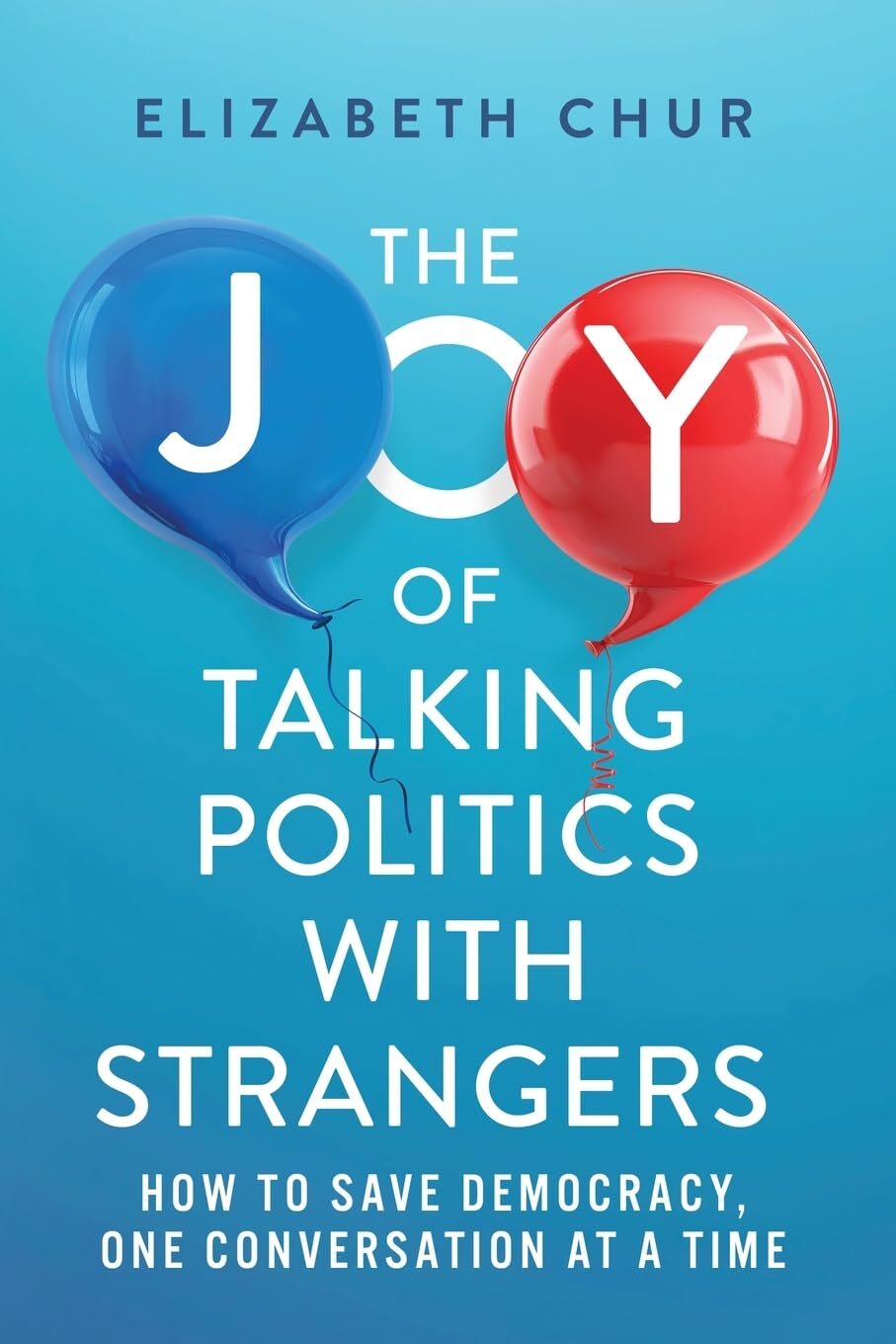
The Joy of Talking Politics With Strangers

How to save democracy one conversation at a time

by Elizabeth Chur

Publisher: Talk with Voters Publishing

Elections are decided on front porches and phone calls across the country, one voter at a time. The Joy of Talking Politics with Strangers is a comprehensive guidebook that helps volunteers connect one-on-one with voters – our most powerful tool for winning elections. These conversations can also spark unexpected moments of empathy and even kinship with our fellow Americans.
 

After 2016, volunteer Elizabeth Chur realized it’s up to ordinary citizens to protect our democracy. She started learning Spanish, began phone banking, and canvassed in California’s Central Valley, home to some of the nation’s most contested swing districts. By talking with over 1,000 people, she discovered how to forge meaningful connections with the hardest-to-reach voters, including:

  • Young people
  • Latinos
  • People who say, “I don’t vote.”

Filled with uplifting stories and practical tips, this inspiring book helps you earn people’s trust – and their votes. It demonstrates how taking positive action builds community and creates hope. Whether you’re a first-time volunteer or seasoned activist, The Joy of Talking Politics with Strangers shows you how to engage more effectively with voters and win elections.


Buy

Substack Feed

Is the press trying to help elect Trump?

Trump loses again, as Biden is cleared

By: L O L G O P

Frame Lab advises responding to the special council report of Biden’s classified documents investigation by pointing out that Biden was cleared while Trump is still facing indictments. 

“The best way for the media to sell newspapers and clicks is to give Republicans what they want to hear, which drives liberals to hate reading, hate sharing, and even hate subscribing.  By rebutting them, [we] spread and strengthen them. That’s how our brains work.” 

Always ‘Reframe’ Republican Talking Points

NEVER REPEAT LANGUAGE REPUBLICANS USE

“Consider the phrase “tax relief.” The world “relief” frames the word “tax” as an affliction or form of suffering. We generally need “relief” from things that are painful or unpleasant…Another example: Consider the phrase “forced birth.” It frames abortion bans with a negative word, “forced,” which frames abortion bans as aggressively stripping women of their freedom.”  Moral Warfare 101: Frames and Your Brain, Frame Lab, February 5, 2024 

“…when environmental issues are reframed in terms of the conservative value of purity – emphasizing the importance of keeping our forests, drinking water, and skies pure – conservatives are much more likely to support this cause.  

The power of framing: It’s not what you say, it’s how you say it

The Guardian, July 20, 2017

Climate change? Global warming?

“David Fenton, a longtime PR specialist for progressive causes…urges the climate community to speak of pollution – a word everyone gets – and to settle on the image of a ‘blanket of pollution trapping heat on Earth’. Every oil and gas emission makes that blanket thicker – and all that trapped heat helps cause floods and start fires, he says.” As heat records break, the climate movement has the right answers – but the words are all wrong The Guardian, July 14, 2023

Frame Lab explains:

“Much of politics is a struggle to define how certain key words are framed — words like ‘tax,’ ‘freedom,’ ‘rights’ and ‘truth.’ 

“If you oppose an issue, you must try to frame it in negative terms. If you support an issue, you must try to frame it positively.”

Cognitive scientist Dr. George Lakoff and journalist Gil Duran share their political messaging expertise at  

Frame Lab on Substack.

Latest Frame Lab Articles

  • by L O L G O P
    AI. Crypto. Trump. All three are the same con with different wigs.
  • by L O L G O P
    When the headline is all most people read, leading with a lie spreads it. The Truth Melt: lead with the truth, name the lie only to correct it.
  • by Gil Duran
    Ten years ago today, JD Vance published an essay that called Donald Trump “cultural heroin” and “an opioid of the masses”:During this election season, it appears that many Americans have reached for a new pain reliever. It too, promises a quick escape from life’
  • by Gil Duran
    Trump's name was scraped off the Kennedy Center wall by court order. Wannabe dictators put their names on things. The law said no.
  • by Gil Duran
    Things have been a bit quiet here at FrameLab. That silence has a reason: I have been finishing a book.The Nerd Reich: Silicon Valley Fascism and the War on Democracy will be published on August 18 by Avid Reader Press, an imprint of Simon & Schuster. You can pre-
  • by Gil Duran
    Trump's MAGA movement is plotting to steal the midterm elections with a fake national emergency. Here's how to frame it—and what you can do.
  • by L O L G O P
    Trump's approval hits 37% as his strongman psychology prevents him from fixing the economy he broke. The strict father model is now his trap.

Yes, Republicans really believe in starving kids

By: L O L G O P

Republican governors in 15 red states have refused to participate in this summer’s federal free lunch program, denying food to approximately 8 million kids. 

Frame Lab advises responding without mentioning welfare states or calling Republicans scrooges. Say instead,  “Tate Reeves [Republican Governor of Mississippi] doesn’t want these kids to succeed. He doesn’t want them to have the same freedom as his kids enjoy. This isn’t just about punishing poor kids for being poor. It’s about taking away their opportunities.”

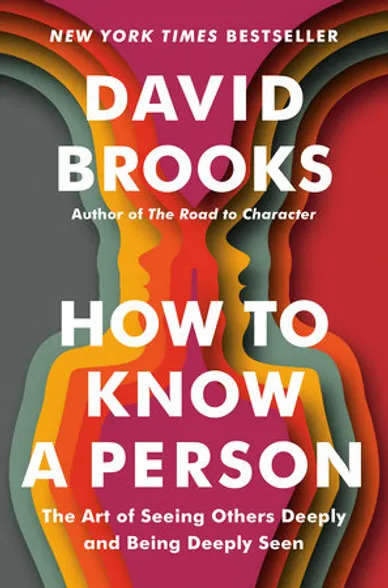
How to Know a Person

The Art of Seeing Others Deeply and Being Deeply Seen

by David Brooks

Summary

Recommended by Bob

Driven by his trademark sense of curiosity and his determination to grow as a person, David Brooks draws from the fields of psychology and neuroscience and from the worlds of theater, philosophy, history, and education to present a welcoming, hopeful, integrated approach to human connection. How to Know a Person helps readers become more understanding and considerate toward others, and to find the joy that comes from being seen. Along the way it offers a possible remedy for a society that is riven by fragmentation, hostility, and misperception.

Continue reading How to Know a Person

Muffle MAGA’s Megaphone

SWING LEFT PENINSULA created these engaging videos to help spread the word effectively that things are better when Democrats are in office AND to counter MAGA Republicans’ anti-democracy messages. 

To Muffle the MAGAphone:

  1. Avoid amplifying MAGA messages.
  2. Amplify pro-Democracy messages. 
  • Don’t Repeat Disinformation – What’s the best thing to do when encountering MAGA disinformation? NOTHING!
  • Ignore DogWhistles – Ever wonder why MAGA Republicans repeat certain words and phrases? Hint: Dog whistles
  • Stay United! – Why do MAGA Republicans spend so much time attacking an ever-growing list of others?
  • Frame It Our Way! – We need to avoid repeating MAGA GOP frames, even to refute them. Talk about the good stuff – what we need for all Americans to thrive.
  • Share Effectively – What makes an effective message? Lead with shared values. Identify who stands in the way of those values and why. End with your vision for a better future.

Words that Win – The 3V Messaging Framework

VALUES, VILLAINS, and VISION

Communications consultant Anat Shenker-Osorio developed the 3V messaging framework. Effective 3V messages: 

  1. lead with shared values, 
  2. name the villains and their motives for opposing those values,
  3. present your vision for a better future. 

As linguist George Lakoff says, “People vote based on values, connection, authenticity, trust and identity” – not lists of policies and facts.

BAC’s 3V Messaging Library

The Bay Area Coalition offers 3V statements on the critical issues of our time.

The Art & Science of Persuasion Playbook

A Message from Galvanize Action about a huge block of persuadable voters!

“White women are the largest voting bloc in this country and will be for decades to come. They account for 38% of the national vote share and 43% of the vote share across Galvanize Action’s priority states. Within this voting bloc, we’ve identified 44,093,812 moderate women who are not ideologically entrenched, meaning they are open to new ideas and perspectives and movable on key issues such as reproductive freedom, healthcare, gender equity, climate, and the economy.”

Galvanize Action has a fabulous interactive messaging worksheet we can all use!

Galvanize Action says, “We’ll share with you exactly how to create a message that meets people at their values and how to turn those into an effective ad. Our interactive worksheet will guide you through the process with prompts about your target audience and the issue you want to move them on. You’ll walk away with customized advice!”

How to Have Impossible Conversations

A Very Practical Guide

by Peter Boghossian and James Lindsay

Publisher: Balance

 
From politics and religion to workplace negotiations, ace the high-stakes conversations in your life with this indispensable guide from a persuasion expert.

In our current political climate, it seems impossible to have a reasonable conversation with anyone who has a different opinion. Whether you’re online, in a classroom, an office, a town hall—or just hoping to get through a family dinner with a stubborn relative—dialogue shuts down when perspectives clash. Heated debates often lead to insults and shaming, blocking any possibility of productive discourse. Everyone seems to be on a hair trigger.

In How to Have Impossible Conversations, Peter Boghossian and James Lindsay guide you through the straightforward, practical, conversational techniques necessary for every successful conversation—whether the issue is climate change, religious faith, gender identity, race, poverty, immigration, or gun control. Boghossian and Lindsay teach the subtle art of instilling doubts and opening minds. They cover everything from learning the fundamentals for good conversations to achieving expert-level techniques to deal with hardliners and extremists. This book is the manual everyone needs to foster a climate of civility, connection, and empathy.

“This is a self-help book on how to argue effectively, conciliate, and gently persuade. The authors admit to getting it wrong in their own past conversations. One by one, I recognize the same mistakes in me. The world would be a better place if everyone read this book.”  —Richard Dawkins, author of Science in the Soul and Outgrowing God
 

Buy

A Summary of the Key Points

Seven Fundamentals of Good Conversations

  • Goals – Why are you engaged in this conversation?
  • Partnerships – Be partners, not advocates
  • Rapport – Develop and maintain a good connection
  • Listen – Listen more, talk less
  • Shoot the Messenger – Delivering “messages” doesn’t work, have a “conversation,” an exchange instead
  • Intentions – People have better intentions than you may think
  • Walk Away – Don’t push your conversational partner beyond their conflict zone

Beginner Level: Nine Ways to Start Changing Minds

  • Modeling – Model the behavior you want to see in others
  • Words – Define terms up front
  • Ask Questions – Focus on a specific question with genuine curiosity; avoid generalities, broad conclusions
  • Acknowledge Extremists – Point out and acknowledge unhelpful things people on your side have done
  • Navigating Social Media – Do not vent on social media
  • Don’t Blame, Do Discuss Contributions – Shift from “blaming” terms to “contribution” language,
    acknowledging things that got us to this unhappy place and emphasizing how to move forward
  • Focus on Epistemology – Figure out how people “know” what they claim to know, what’s the evidence
  • Learn – Learn what makes someone close-minded, what personal experiences have led them to a position
  • What NOT to Do (Reverse Applications) – A list of fundamental and basic conversational mistakes

Intermediate Level: Seven Ways to Improve Your Interventions

  • Let Friends Be Wrong – It’s okay if someone disagrees with you, even about a cherished conclusion
  • Build Golden Bridges – Find ways for your conversation partner to avoid social embarrassment if they
    change their mind
  • Language – Avoid “you,” switch to third person or collaborative language like “we” and “us”
  • Stuck? Reframe – Shift the conversation to keep it going smoothly or to get it back on track, use metaphors
  • Change Your Mind – Change your mind on the spot or be willing to reconsider
  • Introduce Scales – Use scales to gauge effective interventions, figure out how confident someone is in a
    belief, seeking places where they might be willing to reconsider, and put issues into perspective
  • Outsourcing – Turn to outside information to answer the question, “How do you know that?”

Five Advanced Skills for Contentious Conversations

  • Keep Rapoport’s Rules – Re-express, list points of agreement, mention what you learned, only then rebut
  • Avoid Facts – Bringing facts into a conversation requires considering timing and what counts as evidence
  • Seek Disconfirmation – How could that belief be incorrect?
  • Yes, and … — Eliminate the word “but” from your spoken vocabulary; affirm first, then add
  • Dealing with Anger – Know thyself; don’t escalate, monitor your emotions and take a pause if necessary

Six Expert Skills to Engage the Close-Minded

  • Synthesis – Recruit your partner to help refine and synthesize your positions
  • Help Vent Steam – Talk through emotional roadblocks
  • Altercasting – Cast your partner in a role that helps her think and behave differently
  • Hostage Negotiations – Use research-based ideas from hostage negotiations: mini-encouragers, mirroring, etc
  • Probe the Limits – Engage someone who professes a belief that can’t be lived, unmask disingenuous stmts.
  • Counter-Intervention Strategies – If someone is trying to intervene in your cognitive processes, go with it…

Master Level: Two Keys to Conversing

  • How to Converse with an Ideologue – Switch to moral epistemology, talk about values
  • Moral Reframing – Learn to speak moral dialects, study Jonathan Haidt’s moral foundations

The Hidden Tribes of America

A year-long project of More in Common launched in October 2018.

by: Stephen Hawkins, Daniel Yudkin, Míriam Juan-Torres, and Tim Dixon

Publisher: More in Common US

Recommended by: Bob B.

The report was conducted by More in Common, a new international initiative to build societies and communities that are stronger, more united, and more resilient to the increasing threats of polarization and social division. We work in partnership with a wide range of civil society groups, as well as philanthropy, business, faith, education, media and government to connect people across the lines of division.

America has never felt so divided. Bitter debates that were once confined to Congressional hearings and cable TV have now found their way into every part of our lives, from our Facebook feeds to the family dinner table. But most Americans are tired of this “us-versus-them” mindset and are eager to find common ground. This is the message we’ve heard from more than 8,000 Americans in one of our country’s largest-ever studies of polarization: We hold dissimilar views on many issues. However, more than three in four Americans also believe that our differences aren’t so great that we can’t work together.

A range of major issues split the country

  • Immigration impact
  • White privilege
  • Sexual Harassment
  • Islamophobia

George Lakoff’s Frame Lab Messaging Guide

“Trump is a loser, a fraud, and a liar.”

Frame Lab advises calling Trump a loser, a fraud, or a betrayer of trust. A dictator creates an image of power, whereas a loser is a label no strict father/wannabe dictator will admit. 


Latest Articles

  • by L O L G O P
    AI. Crypto. Trump. All three are the same con with different wigs.
  • by L O L G O P
    When the headline is all most people read, leading with a lie spreads it. The Truth Melt: lead with the truth, name the lie only to correct it.
  • by Gil Duran
    Ten years ago today, JD Vance published an essay that called Donald Trump “cultural heroin” and “an opioid of the masses”:During this election season, it appears that many Americans have reached for a new pain reliever. It too, promises a quick escape from life’
  • by Gil Duran
    Trump's name was scraped off the Kennedy Center wall by court order. Wannabe dictators put their names on things. The law said no.
  • by Gil Duran
    Things have been a bit quiet here at FrameLab. That silence has a reason: I have been finishing a book.The Nerd Reich: Silicon Valley Fascism and the War on Democracy will be published on August 18 by Avid Reader Press, an imprint of Simon & Schuster. You can pre-