
This Is the Formula That Defeated Orban. It Would Defeat Trump, Too

By M. Gessen, an Opinion columnist, and Mr. Bartha reported from Budapest.

Publisher: The New York Times

Recommended by: Bob B. and Bruce R.

Starting early in the morning on the second Saturday of May, first hundreds and then thousands of people gathered in the square in front of Hungary’s majestic Parliament building to celebrate the start of a new political era. This was the square where tens of thousands gathered in 1956 and 1989 to demand an end to the Soviet occupation and in 2006 to protest a discredited government. It was the square on which Prime Minister Viktor Orban’s regime imposed a major redesign more than a decade ago — with traffic rerouted away, a large reflecting pool and raised beds installed, narrow pathways laid down — apparently to ensure that no such mass gathering could take place again. Today it was the square where Peter Magyar, a former Orban loyalist, would be sworn in, promising a rebirth of democracy and liberty after 16 years of autocratic control.

Squeezing into the available spaces and gradually filling up nearby cafes and streets, the crowd absorbed people of all ages: young people who didn’t remember a time before Orban and who had voted in unprecedented numbers; aging intellectuals who didn’t think they’d ever celebrate their country again; multigenerational families who had arrived by bus after seeing Magyar in their hometowns and villages. During his campaign, Magyar had traveled to an estimated 700 locations, turning many of them into “Tisza islands” — outposts of support for his party. By the end, Magyar was holding five or more rallies a day.

It had looked like an impossible quest. Orban and his cronies dominated the media, persecuted and smeared opposition politicians and changed election laws to benefit his party, Fidesz. Orban had seemed to achieve what the Hungarian sociologist and political theorist Balint Magyar (no relation) calls “autocratic breakthrough” — the point after which it’s impossible to unseat an autocrat using elections. Illiberal politicians from other countries made pilgrimages to Hungary to learn from Orban; CPAC, the gathering for American national conservatives, started staging an annual convention there; and Vice President JD Vance visited Budapest in advance of the election, in a show of support for Orban. And yet Hungarians handed Tisza not just a victory but a constitutional majority, enough power to reverse Orban’s changes to Hungarian laws and institutions. The triumph was stunning — unique in our era of democratic backsliding — and it holds clear lessons for the United States.

Summary of the 10 main points

  1. One obvious lesson of Peter Magyar’s success lies in the scale, reach and relentlessness of his organizing network. “They had 2,000 Tisza islands with between 30,000 and 50,000 volunteers,”
  2. Old-fashioned in-person politics can be a powerful antidote to media fearmongering.
  3. Third lesson: Don’t mince words. Peter Magyar… [borrowed] a term coined by Balint Magyar, he has called it a mafia state — a fundamentally criminal enterprise.
  4. Magyar’s credibility lay in the fact that he was not a member of the old opposition, whose policies had led to the discontent that made Orban’s rise possible and whose timidity had helped perpetuate Orban’s power.
  5. That’s a fifth lesson: Grass-roots organizations that have little or no connection to electoral politics — in the United States, that might be the networks formed by the No Kings rallies, ICE-resistance groups and so on — can matter as much as or more than those already focused on winning votes.
  6. Another lesson lies in the issues that motivated Magyar’s voters. Hungarians seemed to see the damage that Orbanism had done to the nation as more important than any harm they felt they had suffered as individuals. They were united by a sense of moral outrage
  7. In some U.S. coverage, Magyar has been labeled centrist or right-of-center. What his politics actually are — and this is another lesson of his victory — is pluralist.
  8. a child sexual abuse scandal and a cover-up also appear to have played a significant role. Perhaps this is because such stories can shed a particularly harsh light on networks of power, and the abuses of power.
  9. Everyone I interviewed in Hungary insisted that regime change would not be complete until a full accounting of the abuses of the Orban regime had occurred and those guilty of crimes were punished
  10. another lesson of Magyar’s victory: His politics are aspirational and inspirational, a tone that is an antidote to the cynicism and vulgarity of autocracy.

In Magyar’s address:

“…rediscover how to see ourselves as a community once again,” he said. “Therefore, I ask you to turn toward those compatriots who are disappointed today, who are afraid, or who experience this period as a loss. Do not try to defeat them; do not look down on them. Listen to them and talk to them. Tell them that this country belongs to them, too; that they are needed, just as everyone is needed; and that together, we will rebuild Hungary, because there is no left, there is no right — only Hungarians.”

If you don’t have a NYT account, you can get an archived PDF:
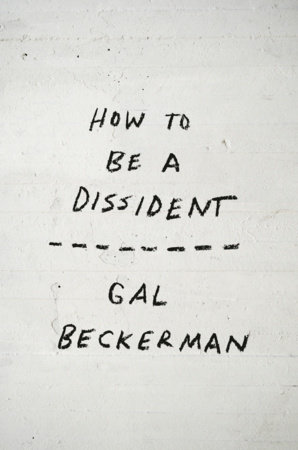
How to Be a Dissident

By Gal Beckerman
Apr 21, 2026
Publisher: Crown
Recommended by: Bruce R

An invigorating guide to fighting back—part philosophy, part history, and part manual for living with integrity in an age of conformity and authoritarian drift

How do we push back in a world where political leaders wield fear and intimidation? Where digital technology dehumanizes and flattens us? We need role models, and in this engaging book, acclaimed writer Gal Beckerman goes looking for them. Drawing on the stories of dissidents from around the globe and across time, from Socrates to Ai Weiwei, and thinkers like Hannah Arendt and Iris Murdoch, Beckerman reveals the defining characteristics these extraordinary figures share, a set of attributes and practices for anyone navigating the pressures of modern tyranny.

Structured around ten qualities—among them, Be Pessimistic, Be Funny, Be Reckless, and Be Immortal—this illuminating, surprising book blends intellectual history, biography, and cultural criticism. It charts a dissident’s journey from the solitary moment of recognizing the truth, through the risks of speaking it, to the legacy that can outlast a life. What makes dissidents tick? And how might we change when we encounter them?

Urgent and inspiring, Beckerman’s book shows that dissidence is a human capacity we can all cultivate, a refusal to betray one’s inner voice, no matter the cost. In a polarized America and a world sliding toward authoritarianism, we need dissidents—not only the jailed and martyred, but also those of us who face small daily compromises of conscience. How to Be a Dissident lights the way.


How To Resist Authoritarianism Without Losing Yourself | Gal Beckerman
VALOR Media Network and Kristofer Goldsmith (May 27, 2026)

Not in theory. Not in history books. Right now.

In this episode of On Offense, Kris Goldsmith speaks with Atlantic staff writer and author Gal Beckerman about his new book, How to Be a Dissident, and the deeper psychological questions raised by life under rising authoritarianism.

This conversation explores conformity, moral courage, propaganda, normalization, and the pressures that cause ordinary people to stay silent while democratic institutions erode around them.

But more importantly, we discuss what makes dissidents different, and Beckerman’s ten rules that shape them.

Drawing from dissident movements across history — and from the lived reality of the second Trump administration — Beckerman argues that resistance begins long before politics. It begins with the refusal to normalize cruelty, corruption, fear, and obedience.

Together, Kris and Gal discuss:

  • Why authoritarianism depends on adaptation and exhaustion
  • How propaganda reshapes identity and social behavior
  • The psychological pressure to conform
  • Why some people comply while others “sit apart”
  • The role of community and “neighborism” in resisting authoritarian politics
  • Why “hopeful pessimism” may be necessary for democratic survival
  • What integrity looks like in moments of democratic decline

This is a conversation about how human beings behave when institutions fail — and how we choose who we become in the process.

The ONE THING You Can Do to Fight Fascism RIGHT NOW

by Elizabeth Cronise McLaughlin

Publisher: The Ripple Effect Institute

Recommended by: Bruce R.

If it feels like America is sliding deeper into darkness—with voter suppression, book bans, gag orders, and fear spreading daily—you’re not alone. The truth is, fascism thrives when good people hesitate, but democracy grows stronger when ordinary people take action. You don’t need the full roadmap to change the world; you just need to take the next best step. Even the smallest action—whether it’s organizing in your community, speaking out at a school board meeting, or showing up for your neighbors—can disrupt authoritarianism and build momentum for lasting change. In this video, I’ll share why action is the antidote to despair and how you can start making a difference today, no matter your resources or time. History shows us that small acts, multiplied by thousands, topple regimes and create movements. Don’t wait for the “perfect” moment or the “perfect” leader—your courage matters now.

A FREE GUIDE FOR PROGRESSIVE LEADERS READY TO CREATE LASTING IMPACT

How to Lead Change Without Burning Out

READ MY ESSAYS ON POLITICS AND ACTIVISM ON SUBSTACK

Stop ICE Raids Alert Network

Nation-Wide Mobile Alert System

by Sherman Austin

The Stop ICE Raids Alert Network lets you send and receive mobile alerts about nearby ICE activity whenever and wherever it occurs.

No downloadable app required. StopICE works with technology already built into your phone. Send and receive mobile alerts via text message, or at stopice.net, from any mobile device with a tap of a button.

Adjust your notification settings at any time to receive alerts within a certain mile radius of your neighborhood.

Alerts are crowd-sourced by the public. This means alerts are sent directly by people from their communities.

Thoughts on Aliens of Our Creation

Do they work for us, or for themselves?

By: Bruce Rafnel

Publisher: Substack, Authentic Community

Clearly, humans are causing climate change.

But we have more problems than warming the planet. Even if we control the temperature by reducing our CO2 emissions, there are many other ecological problems caused by humans: deforestation, desertification, disruption of water cycles, plastic pollution, insect decline, fishery collapses, and fuel resource depletion. The list goes on and on. “It is no accident that the ruins of the world’s oldest civilizations are mostly in deserts now. It wasn’t desert before that.”

Our human institutions are unwilling (or unable) to address these problems with real solutions. We created these institutions—corporations and governments, most notably—but we seem unable to control them. They have morphed into alien entities that now control us.

The smallest effective human-powered unit is a community, not an individual. However, tight, effective communities have been hobbled. It is time to relearn how to build communities, and then to do the work of taking back our government. At the same time, large organizations can be reformed or broken up, with non-violent actions, to remind them that they exist for humans, not themselves.


Authentic Community feed

Some Actions That Are Not Protesting or Voting

Some examples:

ANTI-CRIMINALIZATION

COMMUNITY DEFENSE/MIGRANT JUSTICE

(Archive Link)

This came from the Mutula Aid 101 course.

Outraged

Why We Fight About Morality and Politics and How to Find Common Ground

By Kurt Gray

Publisher: Pantheon

It’s easy to assume that liberals and conservatives have radically different moral foundations. In Outraged, Kurt Gray showcases the latest science to demonstrate that we all have the same moral mind—that everyone’s moral judgments stem from feeling threatened or vulnerable to harm.

We all care about protecting ourselves and the vulnerable. Conflict arises, however, when we have different perceptions of harm. We get outraged when we disagree about who the “real” victim is, whether we’re talking about political issues, fights with our in-laws, or arguments on the playground.

In this fascinating and insightful tour of our moral minds, Gray tackles popular myths that prevent us from understanding ourselves and those around us. While it is commonly believed that our ancestors were apex predators, Gray argues that for the majority of our evolutionary history, humans were more hunted than hunter. This explains why our minds are hard-wired to perceive threats, and provides surprising insights on the scientific origins of our values and beliefs. Though we might think ourselves driven by objective reasoning, Gray unveils new research that finds our moral judgments are based on gut feelings rather than rational thought, and presents a compelling reminder that we are more alike than we might think.

Drawing on groundbreaking research, Gray provides a captivating new explanation for our moral outrage, and unpacks how to best bridge divides. If you want to understand the morals of the “other side,” ask yourself a simple question—what harms do they see?

Lest Innocent Blood Be Shed

The Story of the Village of Le Chambon and How Goodness Happened There

By: Philip P. Hallie

Publisher: Harper Perennial

Recommended by: Linda H.

“The story of Le Chambon, a Huguenot village in France that saved Jews during WWII, has lived in my heart for years. Imagine my shock and joy to find a You Tube featuring the village as I scrolled through Heather Cox Richardosn’s second traunch of 250 for 250.”

During the most terrible years of World War II, when inhumanity and political insanity held most of the world in their grip and the Nazi domination of Europe seemed irrevocable and unchallenged, a miraculous event took place in a small Protestant town in southern France called Le Chambon. There, quietly, peacefully, and in full view of the Vichy government and a nearby division of the Nazi SS, Le Chambon’s villagers and their clergy organized to save thousands of Jewish children and adults from certain death.