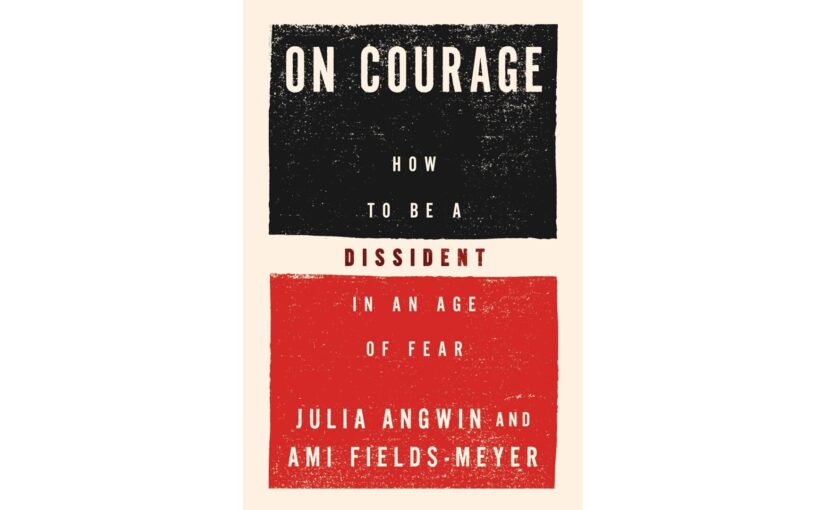
On Courage

How to Be a Dissident in an Age of Fear – A Pulitzer Winner’s Guide to Personal Courage in an Age of Authoritarianism

By: Julia Angwin and Ami Fields-Meyer

Publisher: Simon & Schuster

Recommended by: Steve G.

The United States is only the latest country to face a leader who wields fear as a weapon, punishes political enemies, disappears people off the street, and undermines free and fair elections. Today nearly three out of four people on earth live under authoritarianism, the highest rate since the late 1970s.

But even under repressive conditions, each of us holds the power to help defeat autocrats. Based on their acclaimed The New Yorker essay “So You Want to Be a Dissident?,” veteran reporter Julia Angwin and political strategist Ami Fields-Meyer give us a captivating – and profoundly hopeful – guide to courage in an age of fear.

Meet a student from Hong Kong who risked everything for democracy. A mom in a working-class neighborhood of Caracas who broke with the political movement that raised her. Cairo twentysomethings who staged a gutsy stunt to help bring down a dictator. A mild-mannered immigrant fighting to save a landmark U.S. civil rights law. People throughout the United States and across five continents who faced serious risks for dissenting in their workplace, their community, or their country. On Courage is the story of how they did it anyway – and how you can do it, too.

Blending rich, previously untold narratives with history, spirituality, and movement research, Angwin and Fields-Meyer deliver a highly accessible book full of practical lessons – an inspiring resource for anyone, anywhere, who feel the walls of history closing in on them. On Courage is a roadmap to political courage and a powerful case for how taking personal risks can help save the free world.

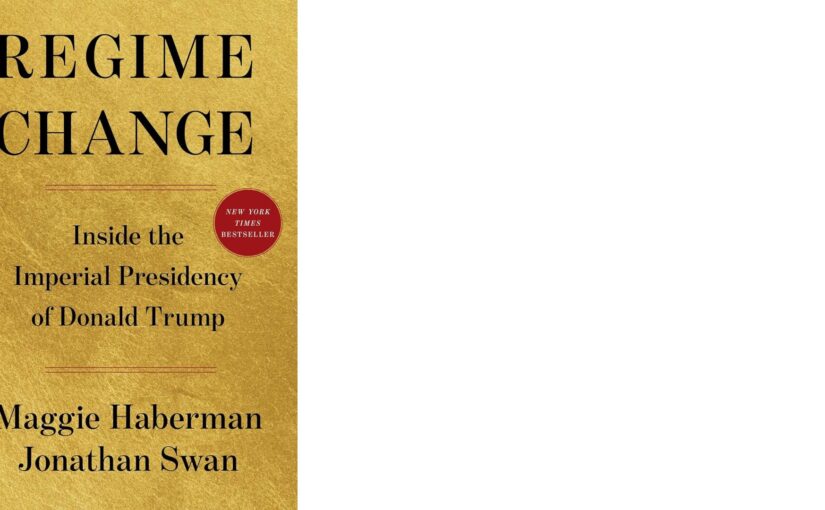
Regime Change

Inside the Imperial Presidency of Donald Trump

By: Maggie Haberman and Jonathan Swan

Publisher: Simon & Schuster

Recommended by: Steve G.

From the two reporters who have covered him more closely than perhaps anyone else over the past decade comes this definitive portrait of Donald Trump in the White House. Regime Change covers the first year of Trump’s second presidency—a term liberated from every constraint that defined his first. The generals who once told him “no” are gone, and the lawyers who remain have learned to pick their battles. His administration has flouted court orders, and he has claimed powers that Congress once checked. What remains is a President willing to take enormous risks that have upended global markets and toppled heads of state; an imperial President operating almost entirely on instinct alone.

Based on hundreds of interviews and unprecedented reporting from deep within the administration’s most closely guarded rooms, Regime Change takes the reader inside the Situation Room and into the secret Oval Office deliberations that have launched a new war in the Middle East and seen Trump seal the border, surge National Guard troops into cities, and send immigration agents into deadly clashes with protestors. Maggie Haberman and Jonathan Swan bring us behind the scenes of a presidency that has transformed the culture, turned the Justice Department into an agent of retribution against the President’s enemies and the office itself into a brazen vehicle for profit. They reveal a second term propelled by a historical irony that Trump himself has come to understand: that the indictments, the convictions, the assassination attempts, and four years of exile made him not weaker but far more powerful, more vengeful, and more willing to gamble than any President in modern history.

This is the story of how Trump has used that power, who has tried to stop him, and why nearly all of them have failed. It is also the story of something American journalists are more accustomed to chronicling in distant capitals than in their own: a President who has fundamentally altered the nature of the office he holds—and, with it, how the rest of the world understands American power. It is an account of Regime Change right here in America—a landmark real-time history of a modern presidency like no other.

Overcoming Citizens United

Getting corporate money out of politics

Report by: David S

Table of Contents


Hawai’i:

Hawaii has enacted a law that prohibits corporations from spending money on political campaigns, effectively redefining the powers granted to corporations within the state. This legislation, signed by Governor Josh Green, is set to take effect on July 1, 2027, and positions Hawaii as the first state to limit corporate political spending in this manner, aiming to restore integrity in the electoral process.

Key Features of the Law

  • Prohibition on Corporate Spending: The law explicitly prohibits corporations from spending money on local, state, or federal political campaigns.
  • Effective Date: The law is set to take effect on July 1, 2027.
  • Legal Basis: The legislation is grounded in the principle that corporations derive their powers from state law, which allows Hawaii to redefine those powers, excluding political spending.

Montana:

The Transparent Election Initiative is a national organization that has sponsored two initiatives in Montana known as the Montana Plan.

“In Montana, we proposed both Constitutional & Statutory Initiatives that will sweep corporate and secret-donor money out of Montana’s local, state, and federal politics. It achieves this not by the state of Montana regulating corporate speech, but by the state of Montana simply declining to grant the corporations it creates the power to spend in politics. This is an authority every state possesses, but no state has used it in more than a century. As of March 2026, I-194, the Statutory Initiative, is certified for signature gathering and is underway across Montana through June 19, 2026. The constitutional initiative was found legally sufficient by the Montana Supreme Court. However, we await a decision on the proposed ballot statement. It is unlikely the proposed constitutional initiative will meet calendar deadlines for signature collection in 2026.”

Montana Initiative 194, Prohibit Entities from Contributing to State and Local Candidate and Ballot Measure Elections Initiative, will be on the Nov. 3, 2026, ballot.

The initiative would prohibit artificial persons, as defined in the initiative, from contributing to campaigns, ballot measure elections, or political parties. Artificial persons would include nonprofits, trusts, partnerships, corporations, trade associations, or unincorporated associations, and all entities doing business in Montana. If an entity violates the initiative, it would be prohibited from doing business in Montana until it has certified compliance with the initiative.


California:

California Assembly Bill 1984 aims to redefine the powers of corporations by revoking their political spending power and limiting their activities to those specifically granted under state law. This bill emphasizes that all political power is inherent in the people, not in corporations.

Key Provisions

Revocation of Political Spending Power

  • The bill revokes the political spending power of corporations.
  • Corporations will only possess powers specifically granted under state law.

Legislative Intent

  • The legislation declares that all political power is inherent in the people.
  • It specifies that corporations are creations of statute and do not have natural rights to political activities.

LegiScan Summary

Introduced by Assembly Member Rogers
Principal coauthor: Assembly Member Kalra
(Coauthors: Assembly Members Addis, Connolly, Elhawary, Garcia, Harabedian, Jackson, Lee, and Schiavo)

Principal coauthor: Senator McGuire
(Coauthors: Senators McNerney and Pérez)

Status: April 20, 2026 Re-referred to Com. on Banking and Finance with amendments from original filing on 2-13-2026.


Actions to Support

  1. Financial support for The Transparent Election Initiative
  2. Contact your CA Assemblymember and State Senator and ask them to co-sponsor and actively support AB 1984.
  3. Write a letter to the editor explaining the bill and why it’s important. Point out that Hawai’i has already done this in a bipartisan manner, and that Montana has ballot initiatives to do the same thing.
  4. Support the CA Fair Elections Act, which repeals the ban on public financing of campaigns. All cities and agencies could create their own public financing system if they choose to. Endorse the act and encourage your elected officials to support it as well.

Video: Hawaii Is Overturning Citizens United | Lever Time

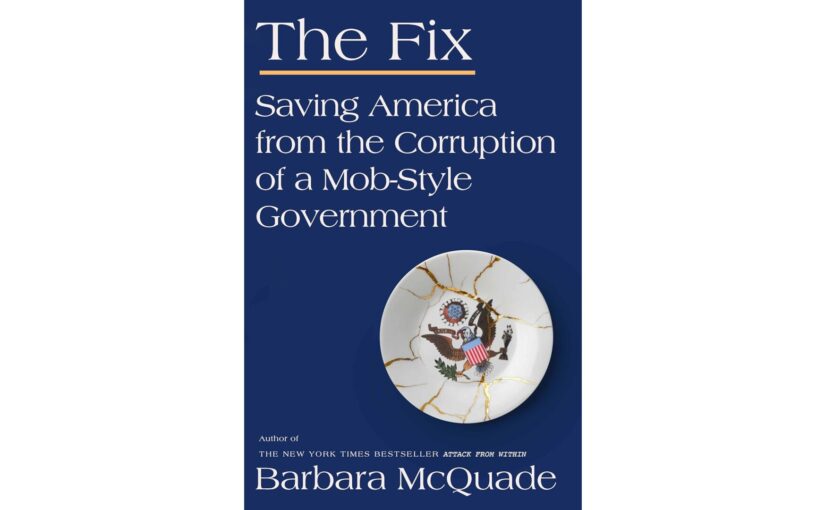
The Fix

Saving America from the Corruption of a Mob-Style Government

By: Barbara McQuade

Publisher: ‎ Seven Stories Press

Recommended by: Steve G.

In The Fix, Barbara McQuade draws on her decades of experience as a federal prosecutor to show us the detrimental effects of a government that uses corruption, cruelty, and chaos as tools of control. As a US Attorney, McQuade became all too familiar with corruption cases, prosecuting former Detroit mayor Kwame Kilpatrick, the “underwear bomber” Umar Farouk Abdulmutallab, and Volkswagen, among others. Here, she exposes how rampant corruption and cruelty are being weaponized to manipulate every facet of American life. Weaving together courtroom stories, lessons from history, and real-time legal analysis, McQuade shows how each corrupt offense, each act of cruelty, is a step toward total authoritarianism.

Yet The Fix is not just a critique of power gone awry. McQuade offers clear strategies that ordinary Americans can utilize, from organizing teach-ins and protests to running for local office, to reclaim the rule of law and ensure that elected officials serve the public’s interest, not their own.

Eye-opening and grounded in the author’s abiding faith in the US Constitution to help restore power to the people, The Fix is essential reading for anyone concerned about the future of America and ready to work together to take it back.

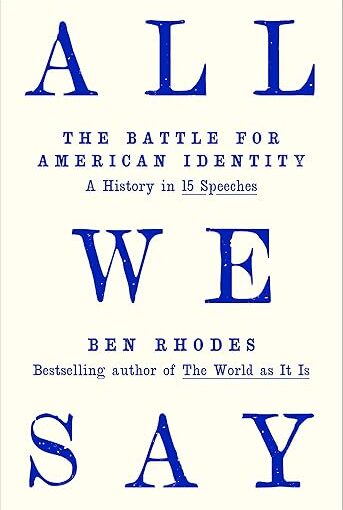
All We Say

The Battle for American Identity: A History in 15 Speeches

Author: Ben Rhodes
May 26, 2026
Publisher: Random House
Recommended by: Steve G.

What does it mean to be American? Who gets to decide? This sweeping history of the United States told through fifteen speeches relives the battle over American identity, from a New York Times bestselling author and one of President Barack Obama’s former speechwriters.

“At a time of moral and political drift, Ben Rhodes reminds us what American greatness actually sounds like, and what it means.”—Ayad Akhtar, author of Homeland Elegies

For 250 years, we have debated what it means to be American. This question shaped the compromises in our Constitution and the arguments we’ve been having ever since—spawning abolitionism, secession, and civil war; populism, mass migration, and global leadership; movements for reform and the backlashes to them. In All We Say, Ben Rhodes tells the story of fifteen speeches—some iconic, others long forgotten—which have both shaped and reflected the argument Americans have been having from our founding to the intense divisions of our time.

Through riveting and beautifully rendered accounts of the people, movements, and moments that produced these speeches, Rhodes traces the history of our battle over identity. The result is a singular and revealing portrait of America itself: a nation divided between two stories—one of inheritance, power, and exclusion, the other of equality, striving, and belonging. Drawing on a decade of writing for Barack Obama, Rhodes also shows us how words can redirect a nation, what makes a speech enduring, and why oratory is a unique form of persuasion in American democracy.

From Benjamin Franklin’s call for compromise at the Constitutional Convention, to Alexander Stephens’ case for white supremacy as the cornerstone of the Confederacy; from Martin Luther King’s dream of true equality to Donald Trump’s rallying cry against democracy itself, these speeches remind us that history is a living argument. At a time when American identity—and truth—is contested, All We Say offers a fresh and powerful look at who we really are and who we could still become.

Actually, Democracy Dies in H.R.

New research sheds light on how mediocre employees help would-be authoritarians maintain power.

By Amanda Taub

Recommended by: Bob B. and Bruce R.

Bob’s Comments

This article on authoritarianism and power shows why the broad topic of “civil discourse” has many dimensions. Which is why IPV has a “Books, Ideas, and Research Committee” to be on the lookout for significant and practical ideas useful for all of us in our democracy-building work.

This is in the NYT this morning, by Amanda Taub, “Actually, Democracy Dies in H.R.” The subtitle is a quick summary of what the article covers: “New research sheds light on how mediocre employees help would-be authoritarians maintain power.”

One could add that the research sheds light, too, on how mediocre citizens can help would-be authoritarians maintain power. So while understanding civil discourse is important, it turns out also to require some understanding of power, what holds a community together, personal incentives, the moral foundations of democratic engagement, etc.

Bruce’s Comments

I think these are the most important parts of the article that point to solutions.

Making a Career in Dictatorship,” a new book by two German political scientists, Adam Scharpf and Christian Glassel, reads like what you might get if you crossed Hannah Arendt’s ideas about the “banality of evil” with a business school guide on how to get the most out of low performers.

And:

Mr. Glassel and Mr. Scharpf are concerned that President Trump’s planned expansion of ICE, in particular, could make it an ideal venue for “detouring” by ambitious underperformers who could be deployed for anti-democratic purposes. The worry is especially profound given the storming of the Capitol at the end of Mr. Trump’s first term, albeit by a less organized band of loyalists.

The playbook for a leader to create a loyal security service, they said, is to set up or repurpose an institution that can become a “second ladder” for career promotions, resource it generously and ensure that the barriers to getting hired there are low, signaling that it offers career opportunities to those who cannot find them elsewhere.

I’ve read Hannah Arendt’s ideas about the “banality of evil,” but I don’t recall her giving any solutions. This article gives some clues about how to prevent this banality with accountability for individuals. Some obvious preventions:

  1. Abolish ICE and any other organization (e.g., DOGE) that has no oversight or accountability by multiple people or laws.
  2. Make sure there is no “second ladder” shortcut to promotions. Being part of an unaccountable organization should hurt one’s career, not help.

This is an important article, so I archived a PDF copy. You can read it here:

Stand Up For Science

Recommended by: Stu W.

On May 29, the Office of Management and Budget posted a sweeping regulatory change that will end American science as we know it.

It’s time to fight back! Head to the SUFS Action Center to:

  • Learn how to write public comments
  • Submit YOUR public comment
  • Contact your Members of Congress
  • Learn how to talk about this new proposed rule and why it matters
  • We all have benefited from scientific advances; these rule changes will destroy US science. (Simply stating opposition is worthwhile for the record)
  • Personal and family stories about medical advances: cancer, COVID, overall lifespan and quality of life
  • Importance of accurate weather forecasts
  • The rules will hinder or eliminate publication and collaborations, essential parts of the scientific enterprise in all fields.
  • Ideological political appointees should not have the power to arbitrarily terminate inconvenient research and overrule scientific peer review.
  • Congress appropriates money, and the executive branch cannot arbitrarily decide not to spend it.
  • Congress has some powers to stop this. Contact your reps and senators and simply state opposition to the rules changes. They will note your opposition; you do not have to write a long piece.

About Us

Stand Up For Science is a political activism organization dedicated to defending and advancing America’s scientific ecosystem, a cornerstone of democracy, freedom, and progress.

Founded in February 2025, we came together in response to the Trump Administration’s dismantling of our nation’s premier science institutions and escalating threats to the lives and livelihoods of Americans. We recognized these attacks for what they are: authoritarian power grabs.

We believe that science is the lifeblood of American democracy and freedom. With a bold strategy combining activism, messaging campaigns, grassroots organizing, and political advocacy, we’re mobilizing the fight for science and democracy, now and for generations to come.

Outraged

Why We Fight About Morality and Politics and How to Find Common Ground

By Kurt Gray

Publisher: Pantheon

It’s easy to assume that liberals and conservatives have radically different moral foundations. In Outraged, Kurt Gray showcases the latest science to demonstrate that we all have the same moral mind—that everyone’s moral judgments stem from feeling threatened or vulnerable to harm.

We all care about protecting ourselves and the vulnerable. Conflict arises, however, when we have different perceptions of harm. We get outraged when we disagree about who the “real” victim is, whether we’re talking about political issues, fights with our in-laws, or arguments on the playground.

In this fascinating and insightful tour of our moral minds, Gray tackles popular myths that prevent us from understanding ourselves and those around us. While it is commonly believed that our ancestors were apex predators, Gray argues that for the majority of our evolutionary history, humans were more hunted than hunter. This explains why our minds are hard-wired to perceive threats, and provides surprising insights on the scientific origins of our values and beliefs. Though we might think ourselves driven by objective reasoning, Gray unveils new research that finds our moral judgments are based on gut feelings rather than rational thought, and presents a compelling reminder that we are more alike than we might think.

Drawing on groundbreaking research, Gray provides a captivating new explanation for our moral outrage, and unpacks how to best bridge divides. If you want to understand the morals of the “other side,” ask yourself a simple question—what harms do they see?

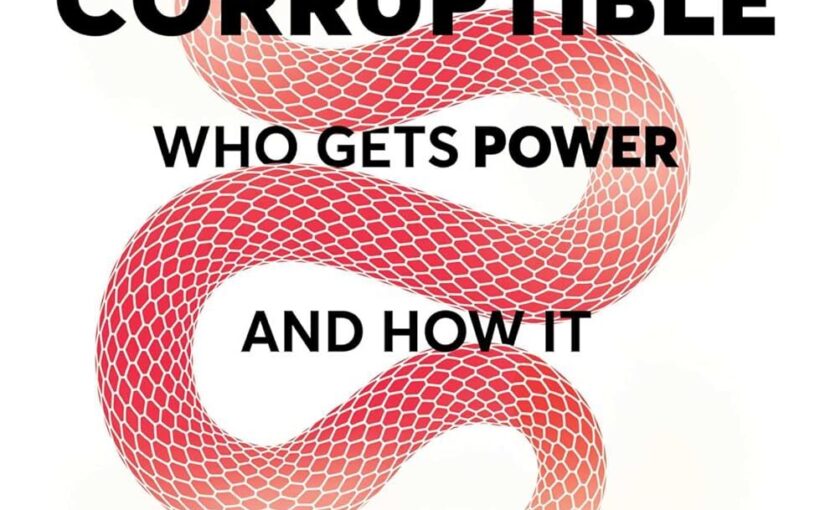
Corruptible

Who Gets Power and How It Changes Us

By: Brian Klaas

Publisher: Scribner

Recommended by: Bruce R.

Does power corrupt, or are corrupt people drawn to power? Are tyrants made or born? Are entrepreneurs who embezzle and cops who kill the result of poorly designed systems or are they just bad people? If you were suddenly thrust into a position of power, would you be able to resist the temptation to line your pockets or seek revenge against your enemies?

To answer these questions, Corruptible draws on over 500 interviews with some of the world’s top leaders—from the noblest to the dirtiest—including presidents and philanthropists as well as rebels, cultists, and dictators. Some of the fascinating insights include: how facial appearance determines who we pick as leaders, why narcissists make more money, why some people don’t want power at all and others are drawn to it out of a psychopathic impulse, and why being the “beta” (second in command) may actually be the optimal place for health and well-being.

Corruptible also features a wealth of counterintuitive examples from history and social science: you’ll meet the worst bioterrorist in American history, hit the slopes with a ski instructor who once ruled Iraq, and learn why the inability of chimpanzees to play baseball is central to the development of human hierarchies.

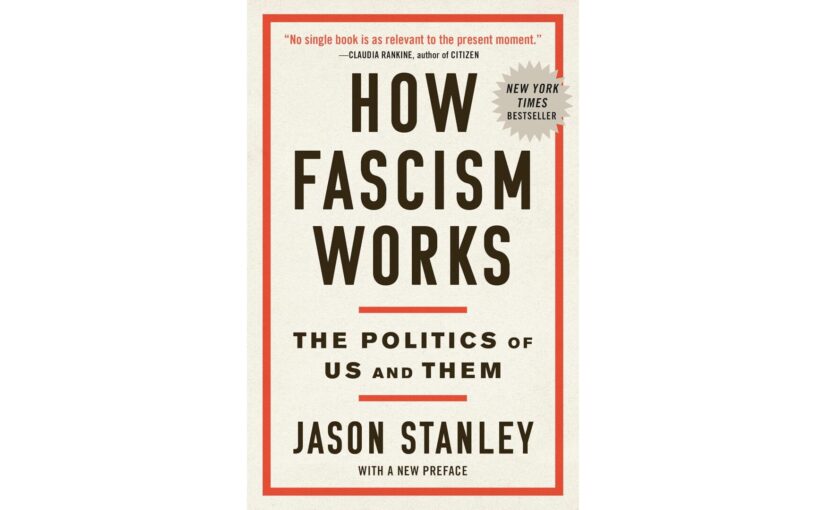
How Fascism Works

The Politics of Us and Them

By: Jason Stanley

Publisher: ‎ Random House Publishing Group

Recommended by: Steve G.

As a scholar of philosophy and propaganda and the child of refugees of WWII Europe, Jason Stanley has long understood that democratic societies, including the United States, can be vulnerable to fascism. In How Fascism Works, he identifies ten pillars of fascist politics—an appeal to the mythic past, propaganda, anti-intellectualism, unreality, hierarchy, victimhood, law and order, sexual anxiety, favoring “the heartland,” and a dismantling of public goods and unions—that amount to an urgent diagnosis of the tactics right-wing politicians use to break down democracies and a critical lens on the current moment.

Stanley knits together reflections on history, philosophy, sociology, and critical race theory with stories from contemporary Hungary, Poland, India, Myanmar, and the United States, among other nations, making clear the immense dangers of language and beliefs that separate people into an “us” and a “them.” By uncovering disturbing patterns that are as prevalent today as ever, Stanley reveals that the stuff of politics—rhetoric and myth—can become policy and reality all too quickly. Only by recognizing them, he argues, can we begin to resist their most harmful effects and return to democratic ideals.

Central Valley Matters

Central Valley Matters is a coalition of organizations in California working to strengthen democracy and activate the electorate. We started as a group of volunteers who actively participated in the congressional elections in the Central Valley starting in 2018, and have grown into an alliance of volunteer groups focused on fundraising and supporting selected local, grassroots organizations in the Central Valley. For activism in the communities of the Central Valley to be sustained, it must be developed organically by and for the people who live there.

Central Valley Matters is dedicated to supporting locally based grassroots organizations that know their communities best and can be most responsive to their needs, and translate that into political power. Such support is a proven and crucial strategy for preserving our democracy, as was evident in Georgia and Arizona in 2020. We believe that when community voices are heard through voting, they are better represented at all levels of government. And our country is better for it.

Currently, our coalition of over 40 California volunteer groups helps to fund civic engagement in the Central Valley, supporting our carefully vetted grassroots organizations based in CA’s CD 22:
Community Water Center Action Fund, Dolores Huerta Action Fund, Poder Latinx,
plus Delano Guardians, Loud for Tomorrow & Valley Voices.

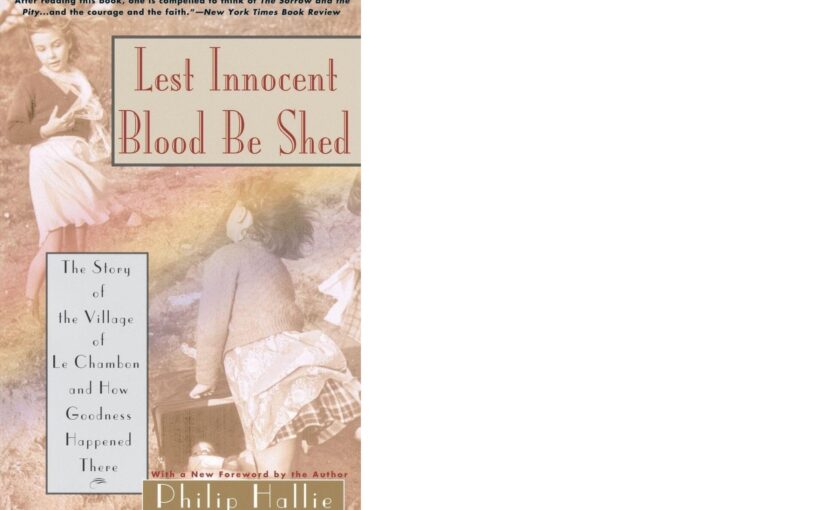
Lest Innocent Blood Be Shed

The Story of the Village of Le Chambon and How Goodness Happened There

By: Philip P. Hallie

Publisher: Harper Perennial

Recommended by: Linda H.

“The story of Le Chambon, a Huguenot village in France that saved Jews during WWII, has lived in my heart for years. Imagine my shock and joy to find a You Tube featuring the village as I scrolled through Heather Cox Richardosn’s second traunch of 250 for 250.”

During the most terrible years of World War II, when inhumanity and political insanity held most of the world in their grip and the Nazi domination of Europe seemed irrevocable and unchallenged, a miraculous event took place in a small Protestant town in southern France called Le Chambon. There, quietly, peacefully, and in full view of the Vichy government and a nearby division of the Nazi SS, Le Chambon’s villagers and their clergy organized to save thousands of Jewish children and adults from certain death.