Lawfare is a non-profit multimedia publication dedicated to “Hard National Security Choices.” We provide non-partisan, timely analysis of thorny legal and policy issues through our written, audio, and other content—all of which you can find here. We strive to achieve academic-level depth with magazine-level readability at the pace of news. We aim to improve the discourse on the law and policy of national security with a relentless focus on substantive issues that matter—in a fashion that is useful to policymakers and practitioners, but also accessible to anyone who wants to access it. Our areas of coverage range from national security law, threats to democracy, cybersecurity, executive powers, content moderation, domestic extremism, and foreign policy, among many others.
Lawfare Daily Playlist
Lawfare Daily: Chris McGuire on the Nvidia Scandal and the Chips That Got Away
Chris McGuire, senior fellow for China and emerging technologies at the Council on Foreign Relations and a former National Security Council official, joins Lawfare Public Service Fellow Julia Curlee to …discuss the spy scandal that forced out Nvidia’s Jensen Huang. They examine how advanced Nvidia chips reached Chinese AI labs through Megaspeed, a Singapore company once run by suspected Chinese intelligence asset Alice Huang, and why the Commerce Department never cut off the flow of chips. They also discuss what China gained, Congress’s next moves, and how the scandal will impact this week’s Trump-Xi meeting.
For more, read McGuire’s “Howard Lutnick Has Got to Go,” in the New York Times.
To receive ad-free podcasts, become a Lawfare Material Supporter at http://www.patreon.com/lawfare 🏛️. You can also support Lawfare by making a one-time donation at https://givebutter.com/lawfare-institute 🏛️.Show More
Lawfare Daily: Chris McGuire on the Nvidia Scandal and the Chips That Got Away
Chris McGuire, senior fellow for China and emerging technologies at the Council on Foreign Relations and a former National Security Council official, joins Lawfare Public Service Fellow Julia Curlee to discuss the spy scandal that forced out Nvidia’s Jensen Huang. They examine how advanced Nvidia chips reached Chinese AI labs through Megaspeed, a Singapore company once run by suspected Chinese intelligence asset Alice Huang, and why the Commerce Department never cut off the flow of chips. …
Chris McGuire, senior fellow for China and emerging technologies at the Council on Foreign Relations and a former National Security Council official, joins Lawfare Public Service Fellow Julia Curlee to …discuss the spy scandal that forced out Nvidia’s Jensen Huang. They examine how advanced Nvidia chips reached Chinese AI labs through Megaspeed, a Singapore company once run by suspected Chinese intelligence asset Alice Huang, and why the Commerce Department never cut off the flow of chips. They also discuss what China gained, Congress’s next moves, and how the scandal will impact this week’s Trump-Xi meeting.
For more, read McGuire’s “Howard Lutnick Has Got to Go,” in the New York Times.
To receive ad-free podcasts, become a Lawfare Material Supporter at http://www.patreon.com/lawfare 🏛️. You can also support Lawfare by making a one-time donation at https://givebutter.com/lawfare-institute 🏛️.Show More
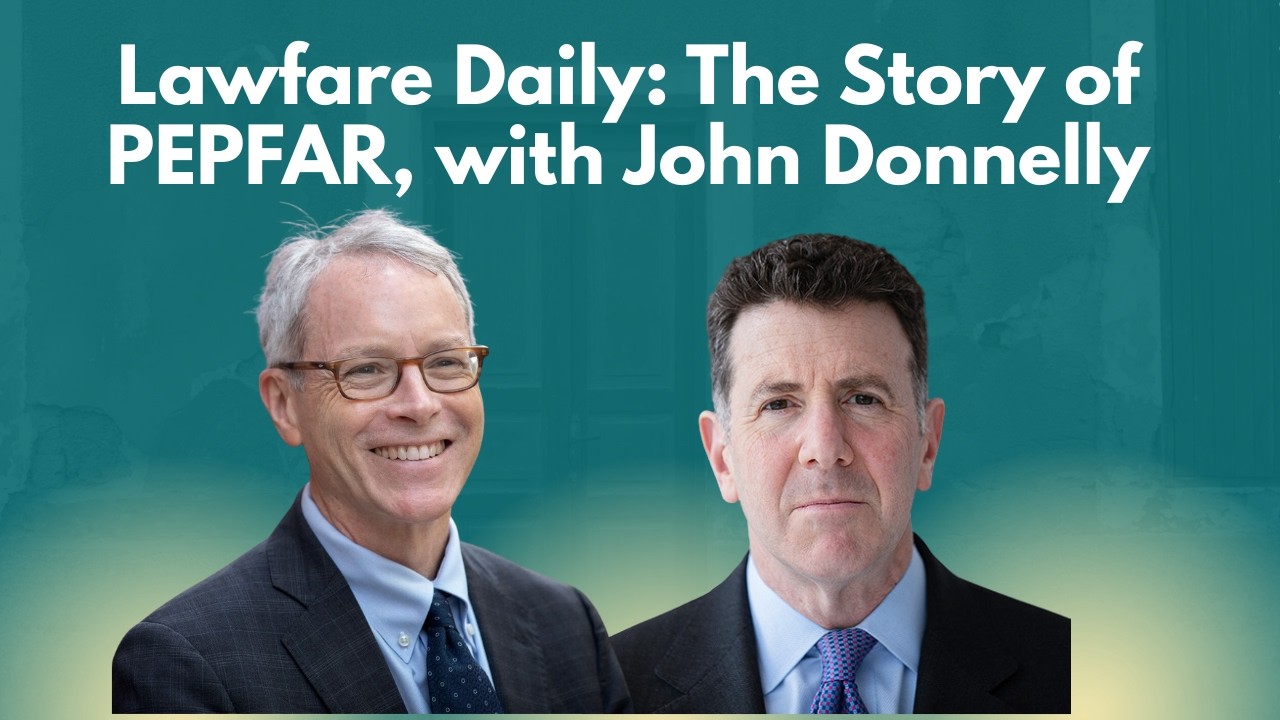
Lawfare Daily: The Story of PEPFAR, with John Donnelly
Lawfare Foreign Policy Editor Dan Byman sits down with John Donnelly, author of the new book, “Lifeline: The Story of PEPFAR, the Greatest Humanitarian Initiative of Our Time.” They discuss PEPFAR, the Bush administration’s landmark effort to fight AIDS in Africa; the origins of the program; how its architects overcame political and bureaucratic obstacles; and whether the United States still has the ability to change the world for good. To receive ad-free podcasts, become a Lawfare Material …
Lawfare Foreign Policy Editor Dan Byman sits down with John Donnelly, author of the new book, “Lifeline: The Story of PEPFAR, the Greatest Humanitarian Initiative of Our Time.” They discuss …PEPFAR, the Bush administration’s landmark effort to fight AIDS in Africa; the origins of the program; how its architects overcame political and bureaucratic obstacles; and whether the United States still has the ability to change the world for good.
To receive ad-free podcasts, become a Lawfare Material Supporter at http://www.patreon.com/lawfare 🏛️. You can also support Lawfare by making a one-time donation at https://givebutter.com/lawfare-institute 🏛️.Show More
Lawfare Daily: The Enduring Appeal of George Smiley
Senior Editor Michael Feinberg sits down with Nick Harkaway, author and son of John le Carré, to discuss the enduring legacy of George Smiley, one of spy fiction’s most indelible characters. They talk about fact and fiction in the world of spy novels—and about Nick’s new book, “The Taper Man: A Novel of John le Carré’s Circus.” To receive ad-free podcasts, become a Lawfare Material Supporter at www.patreon.com/lawfare. You can also support Lawfare by making a one-time donation at …
Senior Editor Michael Feinberg sits down with Nick Harkaway, author and son of John le Carré, to discuss the enduring legacy of George Smiley, one of spy fiction’s most indelible …characters. They talk about fact and fiction in the world of spy novels—and about Nick’s new book, “The Taper Man: A Novel of John le Carré’s Circus.”
To receive ad-free podcasts, become a Lawfare Material Supporter at http://www.patreon.com/lawfare 🏛️. You can also support Lawfare by making a one-time donation at https://givebutter.com/lawfare-institute 🏛️.Show More
Lawfare Daily: Attempted Assassination of Pope John Paul II During the Cold War, with Serhii Plokhy
Lawfare Contributing Editor Mykhailo Soldatenko sits down with Harvard History Professor Serhii Plokhy to discuss his new book, “Killing the Pope,” which tells the history of an attempted assassination of Pope John Paul II during the Cold War and related investigations, trials, and propaganda battles. The book also explores who was behind the assassination, including whether there are any signs of security services or organized crime involvement. To receive ad-free podcasts, become a …
Lawfare Contributing Editor Mykhailo Soldatenko sits down with Harvard History Professor Serhii Plokhy to discuss his new book, “Killing the Pope,” which tells the history of an attempted assassination of …Pope John Paul II during the Cold War and related investigations, trials, and propaganda battles. The book also explores who was behind the assassination, including whether there are any signs of security services or organized crime involvement.
To receive ad-free podcasts, become a Lawfare Material Supporter at http://www.patreon.com/lawfare 🏛️. You can also support Lawfare by making a one-time donation at https://givebutter.com/lawfare-institute 🏛️.Show More
Lawfare Daily: Aya Ibrahim on Progressive Priorities for the New Democratic Congress
Aya Ibrahim is a rising progressive thought leader and advocate in Democratic national security and economic circles. Aya is currently a Senior Fellow at the AI Now Institute, where she focuses on AI’s impacts on national security. She previously worked in government on Capitol Hill, where she served as Rep. Ayanna Pressley’s (D-Mass.) senior economic adviser, and in the Executive Branch. In the Biden Administration, Aya served on the National Economic Council, at the Office of Science and …
Aya Ibrahim is a rising progressive thought leader and advocate in Democratic national security and economic circles. Aya is currently a Senior Fellow at the AI Now Institute, where she …focuses on AI’s impacts on national security. She previously worked in government on Capitol Hill, where she served as Rep. Ayanna Pressley’s (D-Mass.) senior economic adviser, and in the Executive Branch. In the Biden Administration, Aya served on the National Economic Council, at the Office of Science and Technology Policy (OSTP), where she was the lead author of the Administration’s “Blueprint for an AI Bill of Rights,” and on the State Department’s Policy Planning Staff.
Aya joins Lawfare Contributing Editor and host of the Security Economics podcast Peter Harrell to talk about a progressive agenda for the next Congress, about AI regulation, and about U.S.-China policy. Aya and Peter also look back at things that the Biden Administration got right—and wrong—about U.S.-China competition, and they close by talking about how to balance security economics with the domestic economy.
This episode is part of the Security Economics podcast series, in which Peter Harrell and guests explore the intersection of economics and national security, how countries manage their economies to support national security, and how they deploy economic tools in support of geopolitical objectives.
To receive ad-free podcasts, become a Lawfare Material Supporter at http://www.patreon.com/lawfare 🏛️. You can also support Lawfare by making a one-time donation at https://givebutter.com/lawfare-institute 🏛️.Show More
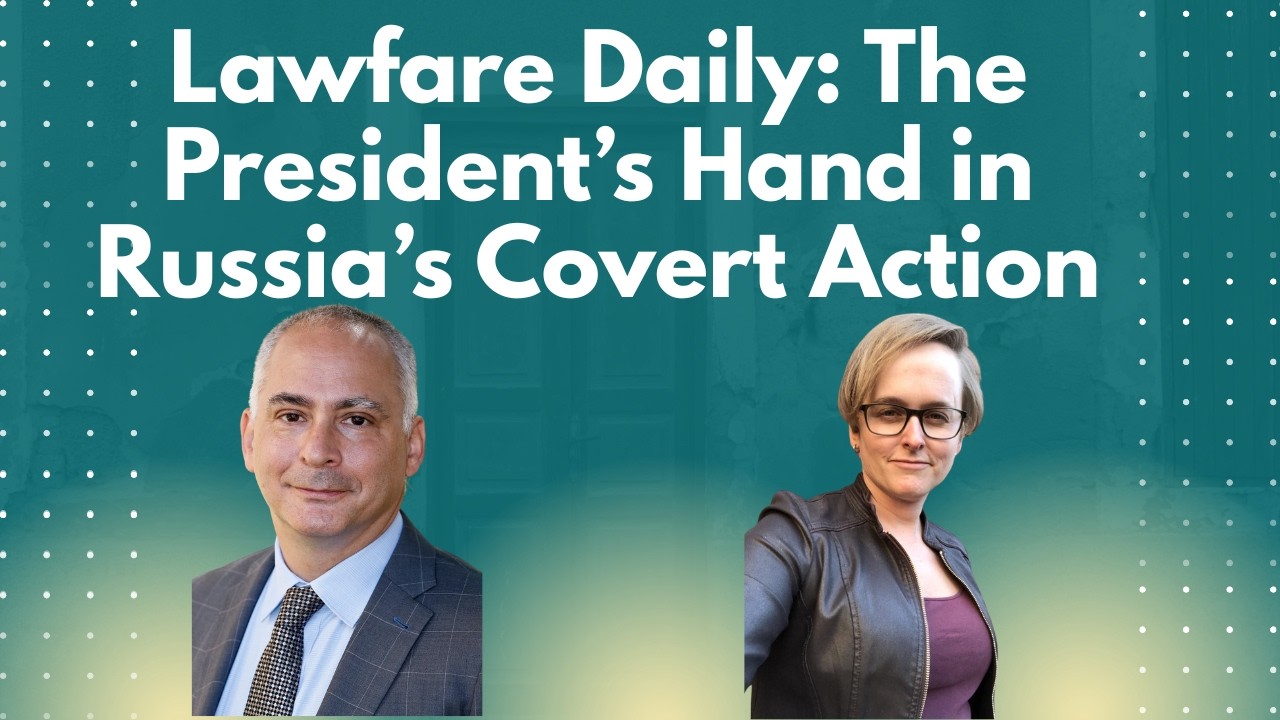
Lawfare Daily: The President’s Hand in Russia’s Covert Action
In this episode, Lawfare Editor in Chief Benjamin Wittes sits down with Lawfare Public Service Fellow Julia Curlee to discuss her new essay, “The Unhidden Hand.” The essay judges Russia’s 2016 election interference by the standards the intelligence profession uses for covert action. Covert operations usually pay off early and then fade. They discuss why this one did the opposite: It was exposed before the votes were counted, yet Moscow’s gains have grown over the decade since, largely …
In this episode, Lawfare Editor in Chief Benjamin Wittes sits down with Lawfare Public Service Fellow Julia Curlee to discuss her new essay, “The Unhidden Hand.” The essay judges Russia’s …2016 election interference by the standards the intelligence profession uses for covert action.
Covert operations usually pay off early and then fade. They discuss why this one did the opposite: It was exposed before the votes were counted, yet Moscow’s gains have grown over the decade since, largely because of the man Russia helped elect. They also cover the dismantling of U.S. defenses against foreign election interference, the purge of the analysts and investigators who exposed the operation, and what Congress could do to build election defenses that no president can switch off.
For further reading, see:
Julia Curlee, “The Unhidden Hand,” Lawfare
To receive ad-free podcasts, become a Lawfare Material Supporter at http://www.patreon.com/lawfare 🏛️. You can also support Lawfare by making a one-time donation at https://givebutter.com/lawfare-institute 🏛️.Show More
Lawfare Daily: Sander Tordoir on Europe's Strategic Choices
Sander Tordoir is the Chief Economist of the Center for European Reform (CEPR) and a prominent European voice in the E.U.’s debate over its economic and technological relationship with China. With European trade policy toward China shifting over the past two years from integration towards managed trade, Sander joins Lawfare Contributing Editor and host of the Security Economics podcast Peter Harrell to unpack the recent E.U.-China deal involving quotas on hybrid cars and the apparent pause …
Sander Tordoir is the Chief Economist of the Center for European Reform (CEPR) and a prominent European voice in the E.U.’s debate over its economic and technological relationship with China. …With European trade policy toward China shifting over the past two years from integration towards managed trade, Sander joins Lawfare Contributing Editor and host of the Security Economics podcast Peter Harrell to unpack the recent E.U.-China deal involving quotas on hybrid cars and the apparent pause in what Sander refers to as “supply chain warfare.”
Sander also explains the new trade instruments the European Union is developing to make itself more nimble in pushing back against Chinese trade issues and whether Europe might one day use those instruments against the U.S. as well. Harrell also answers some of Sander’s questions about shifting views of trade in the U.S.
This episode is part of the Security Economics podcast series, in which Peter Harrell and guests explore the intersection of economics and national security, how countries manage their economies to support national security, and how they deploy economic tools in support of geopolitical objectives.
To receive ad-free podcasts, become a Lawfare Material Supporter at http://www.patreon.com/lawfare 🏛️. You can also support Lawfare by making a one-time donation at https://givebutter.com/lawfare-institute 🏛️.Show More
Lawfare Daily: The Israeli Elections—What Does it All Mean?
For today’s podcast, Executive Editor Natalie Orpett is joined by Natan Sachs of the Center for Middle East Policy, Joel Braunold of the Center Project, and Lawfare Editor in Chief Benjamin Wittes to talk about the Oct. 27 elections in Israel. After record turnout by Israeli voters, especially Arab Israelis, we have an outcome—but the implications are far from clear. They unpack what happened and the questions that remain: Whether longtime Prime Minister Bibi Netanyahu has a path to staying …
For today’s podcast, Executive Editor Natalie Orpett is joined by Natan Sachs of the Center for Middle East Policy, Joel Braunold of the Center Project, and Lawfare Editor in Chief …Benjamin Wittes to talk about the Oct. 27 elections in Israel. After record turnout by Israeli voters, especially Arab Israelis, we have an outcome—but the implications are far from clear. They unpack what happened and the questions that remain: Whether longtime Prime Minister Bibi Netanyahu has a path to staying in power, whether opposition parties can stay unified, and whether there’s any prospect of a governing coalition or if we’re heading toward another round of elections. The future of Israeli politics is still very uncertain. They explain why.
To receive ad-free podcasts, become a Lawfare Material Supporter at http://www.patreon.com/lawfare 🏛️. You can also support Lawfare by making a one-time donation at https://givebutter.com/lawfare-institute 🏛️.Show More
Lawfare Daily: FCC’s Bad Labs Rulemaking with FCC’s Andy Hendrickson and Alice Jou
Andy Hendrickson, the chief of the FCC’s Office of Engineering and Technology (OET), and Alice Jou, the chief of staff and deputy chief of OET, join Lawfare Contributor Justin Sherman to discuss the process for testing and certifying devices in the United States, the offshoring of that apparatus, and how some countries do not allow foreign bodies to certify equipment sold in their borders. They also discuss the national security risks of certain offshoring or foreign-owned or -based testing …
Andy Hendrickson, the chief of the FCC’s Office of Engineering and Technology (OET), and Alice Jou, the chief of staff and deputy chief of OET, join Lawfare Contributor Justin Sherman …to discuss the process for testing and certifying devices in the United States, the offshoring of that apparatus, and how some countries do not allow foreign bodies to certify equipment sold in their borders. They also discuss the national security risks of certain offshoring or foreign-owned or -based testing and certification bodies, a “Minnesota” lab that was actually based in China, the FCC’s “Bad Labs” rulemaking on the problem, and the future of the supply chain and risk space.
To receive ad-free podcasts, become a Lawfare Material Supporter at http://www.patreon.com/lawfare 🏛️. You can also support Lawfare by making a one-time donation at https://givebutter.com/lawfare-institute 🏛️.Show More
Lawfare Daily: Escalate to What End? Trump's Plan for the Iran War After the Midterms
Former NSC staffers Cole Bucy and Nate Swanson join Lawfare Contributing Editor and Vice President of Research, Security and Defense at the Chicago Council on Global Affairs Ari Tabatabai and Lawfare Public Service Fellow Julia Curlee to discuss the Iran war eight months in and the administration’s likely approach after the midterms. Cole and Nate’s new piece in Foreign Policy, “Trump Unleashed” outlines why the president might escalate against Iran and why none of his options is likely to …
Former NSC staffers Cole Bucy and Nate Swanson join Lawfare Contributing Editor and Vice President of Research, Security and Defense at the Chicago Council on Global Affairs Ari Tabatabai and …Lawfare Public Service Fellow Julia Curlee to discuss the Iran war eight months in and the administration’s likely approach after the midterms.
Cole and Nate’s new piece in Foreign Policy, “Trump Unleashed” outlines why the president might escalate against Iran and why none of his options is likely to get him what he wants. Ari and Julia also discuss their piece in Foreign Policy, “How Could Iran Happen? An Autopsy,” examining how the president’s war on the “Deep State” led to this debacle in the Middle East.
To receive ad-free podcasts, become a Lawfare Material Supporter at http://www.patreon.com/lawfare 🏛️. You can also support Lawfare by making a one-time donation at https://givebutter.com/lawfare-institute 🏛️.Show More
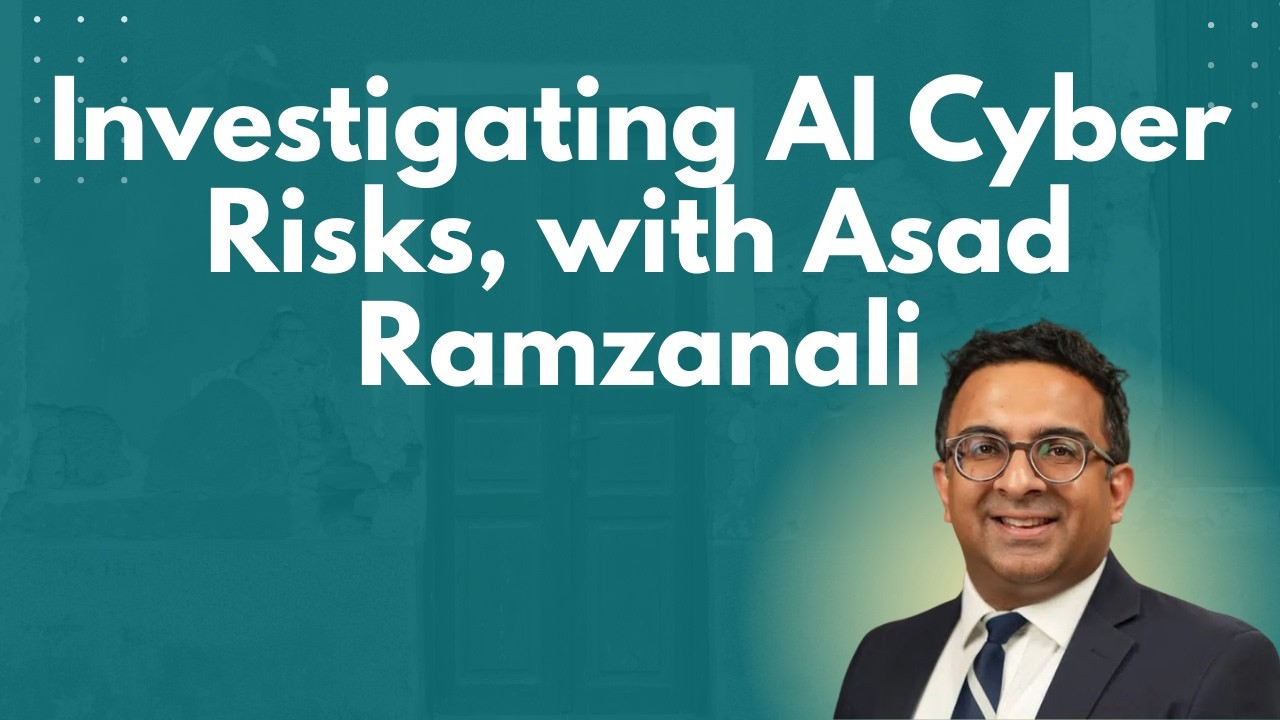
Lawfare Daily: Investigating AI Cyber Risks, with Asad Ramzanali
With the rise of AI-driver cybersecurity incidents, the conversation on how to monitor and assess these incidents is increasingly on the rise. Lawfare Senior Editor Kevin Frazier sits down with Asad Ramzanali, the Director of Artificial Intelligence & Technology Policy at the Vanderbilt Policy Accelerator. The two discuss the creation of a Cyber Safety Review Board, a mechanism based on the National Transportation Review Board designed to independently monitor cybersecurity incidents; how …
With the rise of AI-driver cybersecurity incidents, the conversation on how to monitor and assess these incidents is increasingly on the rise. Lawfare Senior Editor Kevin Frazier sits down with …Asad Ramzanali, the Director of Artificial Intelligence & Technology Policy at the Vanderbilt Policy Accelerator. The two discuss the creation of a Cyber Safety Review Board, a mechanism based on the National Transportation Review Board designed to independently monitor cybersecurity incidents; how it would monitor incidents; and what advantages it would have over current independent monitoring firms.
Asad’s article on this subject can be read here: https://vanderbiltpolicyaccelerator.substack.com/p/who-investigates-ais-cyber-attacks 🏛️.
To receive ad-free podcasts, become a Lawfare Material Supporter at http://www.patreon.com/lawfare 🏛️. You can also support Lawfare by making a one-time donation at https://givebutter.com/lawfare-institute 🏛️.Show More
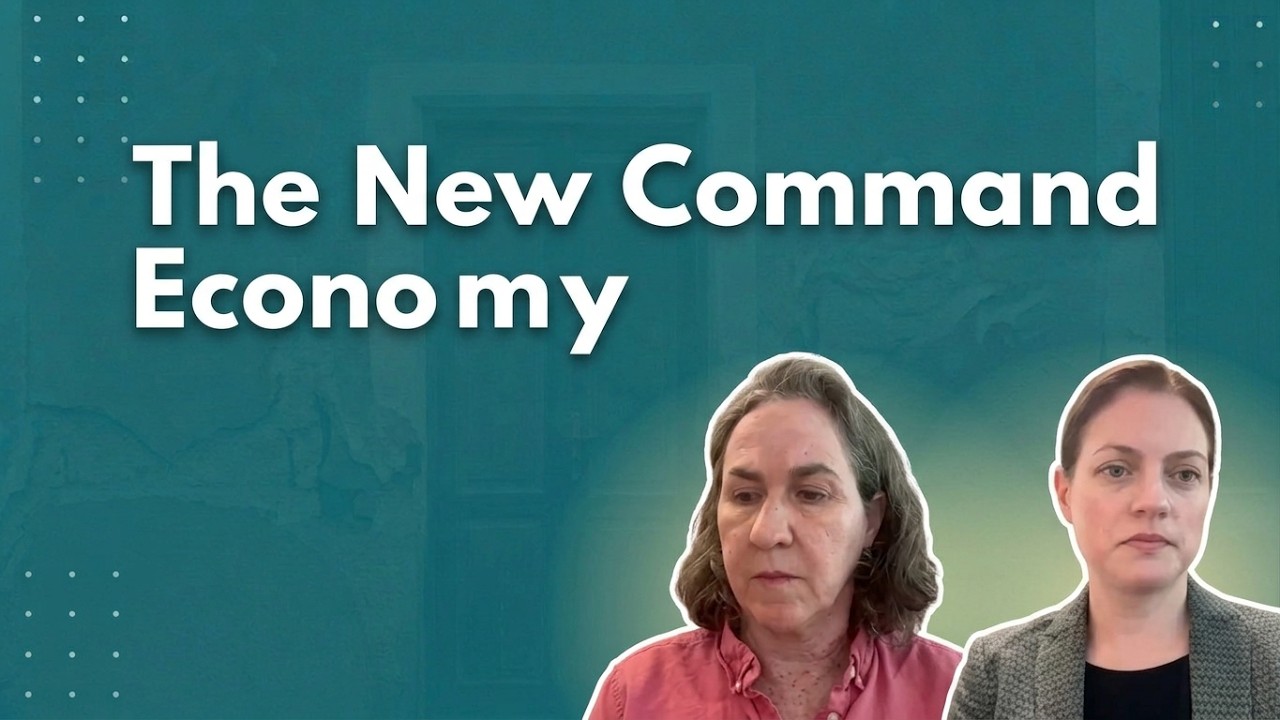
Lawfare Daily: The New Command Economy with Kristen Eichensehr and Ashley Deeks
Over the past decade, the U.S. has expanded its use of measures including tariffs, sanctions, export controls, and investment screening to regulate the economy in the name of national security. It has also embraced new ones such as government-owned equity stakes in private companies and new stockpiles of critical materials. Kristen Eichensehr, a law professor at Harvard, and Ashley Deeks, a law professor at the University of Virginia—and former legal counsel to the National Security …
Over the past decade, the U.S. has expanded its use of measures including tariffs, sanctions, export controls, and investment screening to regulate the economy in the name of national security. …It has also embraced new ones such as government-owned equity stakes in private companies and new stockpiles of critical materials. Kristen Eichensehr, a law professor at Harvard, and Ashley Deeks, a law professor at the University of Virginia—and former legal counsel to the National Security Council—have an article in the Harvard National Security Journal arguing that the U.S. is seeing the emergence of a “new command economy” in which the government plays a much more activist economic role than it has in many decades.
Deeks and Eichensehr join Lawfare Contributing Editor and host of the Security Economics podcast Peter Harrell to unpack what the new command economy is, what it means for companies and the government, and how we should be thinking about incorporating basic legal values like transparency and oversight into this emerging framework.
This episode is part of the Security Economics podcast series, in which Peter Harrell and guests explore the intersection of economics and national security, how countries manage their economies to support national security, and how they deploy economic tools in support of geopolitical objectives.Show More








Comments are closed.