
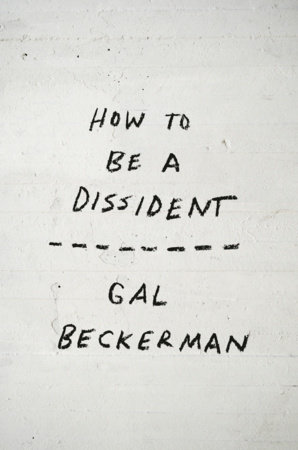
By Gal Beckerman
Apr 21, 2026
Publisher: Crown
Recommended by: Bruce R
An invigorating guide to fighting back—part philosophy, part history, and part manual for living with integrity in an age of conformity and authoritarian drift
How do we push back in a world where political leaders wield fear and intimidation? Where digital technology dehumanizes and flattens us? We need role models, and in this engaging book, acclaimed writer Gal Beckerman goes looking for them. Drawing on the stories of dissidents from around the globe and across time, from Socrates to Ai Weiwei, and thinkers like Hannah Arendt and Iris Murdoch, Beckerman reveals the defining characteristics these extraordinary figures share, a set of attributes and practices for anyone navigating the pressures of modern tyranny.
Structured around ten qualities—among them, Be Pessimistic, Be Funny, Be Reckless, and Be Immortal—this illuminating, surprising book blends intellectual history, biography, and cultural criticism. It charts a dissident’s journey from the solitary moment of recognizing the truth, through the risks of speaking it, to the legacy that can outlast a life. What makes dissidents tick? And how might we change when we encounter them?
Urgent and inspiring, Beckerman’s book shows that dissidence is a human capacity we can all cultivate, a refusal to betray one’s inner voice, no matter the cost. In a polarized America and a world sliding toward authoritarianism, we need dissidents—not only the jailed and martyred, but also those of us who face small daily compromises of conscience. How to Be a Dissident lights the way.
How To Resist Authoritarianism Without Losing Yourself | Gal Beckerman
VALOR Media Network and Kristofer Goldsmith (May 27, 2026)
Not in theory. Not in history books. Right now.
In this episode of On Offense, Kris Goldsmith speaks with Atlantic staff writer and author Gal Beckerman about his new book, How to Be a Dissident, and the deeper psychological questions raised by life under rising authoritarianism.
This conversation explores conformity, moral courage, propaganda, normalization, and the pressures that cause ordinary people to stay silent while democratic institutions erode around them.
But more importantly, we discuss what makes dissidents different, and Beckerman’s ten rules that shape them.
Drawing from dissident movements across history — and from the lived reality of the second Trump administration — Beckerman argues that resistance begins long before politics. It begins with the refusal to normalize cruelty, corruption, fear, and obedience.
Together, Kris and Gal discuss:
- Why authoritarianism depends on adaptation and exhaustion
- How propaganda reshapes identity and social behavior
- The psychological pressure to conform
- Why some people comply while others “sit apart”
- The role of community and “neighborism” in resisting authoritarian politics
- Why “hopeful pessimism” may be necessary for democratic survival
- What integrity looks like in moments of democratic decline
This is a conversation about how human beings behave when institutions fail — and how we choose who we become in the process.